15 Minutes of Stillness — The Djokovic Meditation Method
The most decorated men’s tennis player in history sits still for 15 minutes a day — and rates it as important as practice. The science is real, and smaller than the hype.
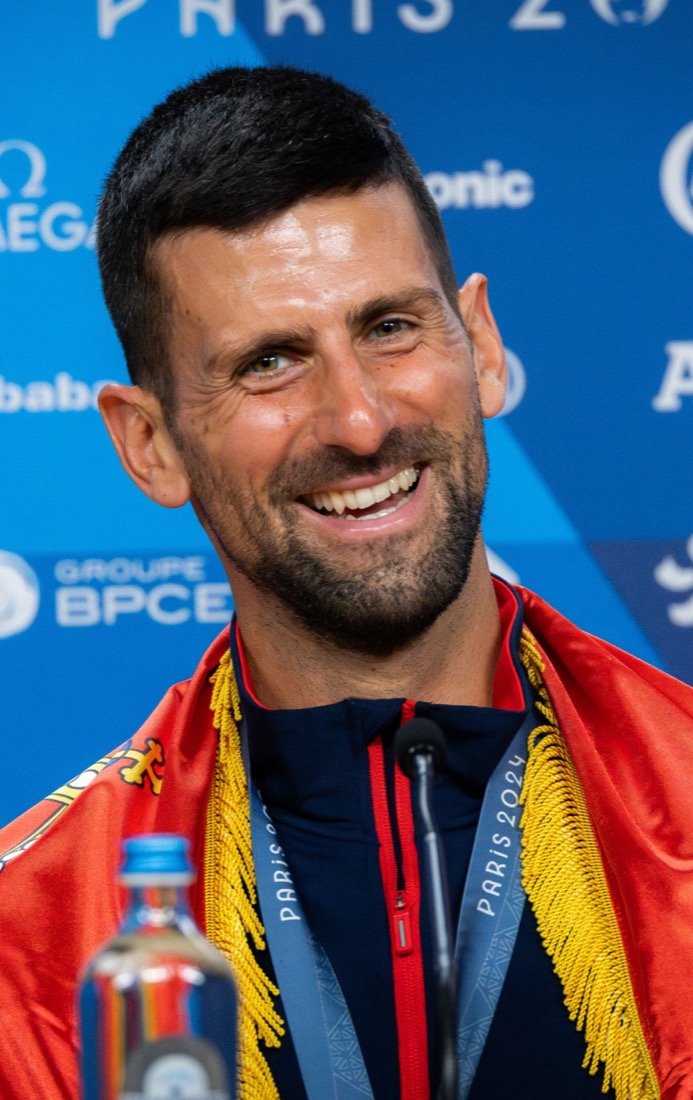
Novak Djokovic has won 24 Grand Slam singles titles — more than any man in tennis history — and spent more weeks ranked world No. 1 than anyone who has ever played the game.
In his own book, Serve to Win (2013), he described the practice he rates alongside his physical training: mindfulness meditation, about 15 minutes, every day. By his account it's how he stopped being owned by self-doubt, anger, and the wandering mind mid-match — not by making the thoughts stop, but by learning to watch them arrive and let them pass without chasing them. Tennis people didn't need the book to believe it; they'd watched him turn from the guy who smashed rackets and lost the big points into the guy famous for staying calm when it mattered most.
Fifteen minutes. Sitting still. Every day. It's the least athletic habit in this series, and an increasingly common one in elite sport. Worth knowing where he sits among the others: most famous meditators practice Transcendental Meditation and gave their quotes to the organisation that teaches it — we sorted through them in celebrities who meditate. Djokovic is the one whose account comes from a book he wrote himself.
The habit, precisely
- Short, fixed, daily. Fifteen minutes, not retreats. The dose is small enough to survive tournament travel, which is exactly why it has survived twenty years.
- Attention practice, not emptiness. The work isn't "no thoughts." It's noticing when your attention leaves, and bringing it back — over and over. Djokovic describes exactly this: the doubt still shows up; it just doesn't run the match anymore.
- Rated as training, not as wellness. He files it with practice and gym — a scheduled input to performance — which is why it gets protected like one.
What the science says — honestly sized
The best evidence: modest, real effects on anxiety, depression, and pain. The benchmark meta-analysis of mindfulness programs — 47 randomized trials, 3,515 participants — found moderate evidence for reduced anxiety, depression, and pain — and, worth noting, only low-strength evidence for plain "stress," the thing meditation is most casually sold for — with effect sizes around 0.3 (Goyal et al., JAMA Internal Medicine, 2014). Two honest readings of that number. First: 0.3 is comparable to what antidepressants show in many primary-care trials — meaningful, not miraculous. Second: the same review found low or insufficient evidence for many of the other claims sold with meditation — mood elevation in healthy people, attention, sleep, weight. If someone tells you meditation fixes everything, the data disagrees. If someone tells you it does nothing, the data disagrees with them too. Two more honest prints: those trials mostly tested eight-week structured programs with far more daily practice than 15 minutes — whether a solo 15-minute habit delivers the same effect is assumed here, not measured. And in head-to-head comparisons, mindfulness didn't beat other active treatments like exercise — it earns a seat at the table, not the head of it.
Attention is trainable — modestly. Multiple trials find that regular mindfulness practice is associated with improved performance on attention and working-memory tasks, though effects vary and many studies are small. The plainest version of the claim survives: the skill being rehearsed — noticing where attention went and bringing it back — improves with rehearsal, which is the whole mechanism (and precisely the skill a fifth set, a school pickup line, and an overflowing inbox all tax).
The habit mechanics are the same as every other habit in this series. Repetition in a stable context, a median of 66 days to automaticity over the 39 of 96 enrolled whose curves the model fitted (Lally et al., 2010; self-report). A fixed 15-minute slot — same chair, same time — is precisely the stable context the habit research describes. People who meditate "when they need it" mostly don't; people with a slot mostly do.
What his story can't prove. Djokovic also had generational talent, a team of coaches, and a famously extreme physical regimen — the meditation is one input among dozens, and no one can isolate its contribution to 24 slams. Thousands meditate daily and win nothing. The honest claim is smaller and still worth having: a man whose job is performing under the worst pressure in his sport judges 15 minutes of attention training worth doing every day for twenty years — and the clinical evidence supports exactly the modest, steadying effect he describes.
Why 15 minutes beats an hour
The failure mode of meditation isn't doing it badly; it's not doing it. Ambitious practices — the hour of silence, the perfect cushion, the retreat — have the same fatal flaw as the 45-minute workout: they don't fit bad days, and bad days are when the mind most needs the rep. Fifteen minutes fits everywhere: hotel rooms, tournament mornings, the gap before the kids wake up. Djokovic's dose has survived two decades of the most disrupted travel schedule in sport precisely because it is small.
And the practice is specific in the same way the Swift treadmill is: the thing rehearsed — attention returning under distraction — is the thing performed. He doesn't meditate to relax. He meditates the way he hits forehands: reps of the exact skill the match will demand.
How to run the method yourself, starting tonight
- Pick ten minutes, same time daily. Ten honest minutes beats fifteen aspirational ones; grow later. Morning survives the day's chaos best.
- Use the simplest form: follow the breath, notice when you've left, return. Every return is one rep. A wandering session with fifty returns is a good session.
- Anchor it to an existing moment — after coffee, after brushing teeth. Stable context is what automates it.
- Expect nothing dramatic for weeks. The clinical effects show up over months of practice; the noticing skill sharpens quietly. Judge the habit by days kept, not by how calm you feel.
- If sitting still feels impossible, walk instead. Slow walking with the same attention rules is the same exercise in a different form.
The mistakes that kill this practice
Trying it for a week and quitting. An effect this size isn't something you'll feel in seven days. The trials run eight weeks and longer; give it at least that.
Judging sessions by calmness. A stormy session where you noticed the storm fifty times did more reps than a placid one. Calm is a frequent side effect, not the score.
Making it an event. Apps, cushions, candles, the perfect room — the more setup it needs, the less often it happens. A chair and a timer is the whole kit.
Only doing it in a crisis. Meditating only when things fall apart is like starting deadlifts after you're injured — you have to build the skill before the pressure arrives. That's the whole reason Djokovic files it under training.
Treating thoughts as failure. The practice is exactly this: getting distracted and coming back. A mind that never wandered would leave nothing to train.
Where HealthBrew fits
HealthBrew's nightly close pairs naturally with a morning practice: fifteen quiet minutes opens the day, sixty seconds closes it — mark the session kept, add an honest line about how the day felt, and watch the green days stack up. Your AI companion coach reads your weeks and shows you what the calm days have in common. Membership, cancel anytime.
Educational content, not medical advice. Meditation is a poor substitute for treatment when anxiety or depression is severe — the same JAMA review that found it helps also found the effect modest. See a clinician first; meditate alongside treatment, not instead of it.
Common questions
Does meditation actually do anything, according to research?
The benchmark meta-analysis (Goyal et al., JAMA Internal Medicine, 2014 — 47 trials, 3,515 participants) found moderate evidence that mindfulness programs reduce anxiety, depression, and pain, with effect sizes around 0.3 — comparable to common first-line treatments, and far short of the everything-fixer it is sometimes sold as. Real, modest, worth 15 minutes.
How long should a daily meditation be?
Djokovic’s documented dose is about 15 minutes daily. The research trials mostly used programs of similar or slightly longer daily practice over ~8 weeks. Practically: ten minutes you will actually repeat beats thirty you will abandon — the habit forming (Lally et al., 2010) depends on the repetition, not the duration.
I can’t stop my thoughts — am I doing it wrong?
No — that is the exercise. The practice is noticing that attention wandered and returning it; each return is one repetition of the skill being trained. A session with many returns is a session with many reps.
Start Compounding Your Habits Tonight.
Use the free reflection generator to log your day. Let your AI companion coach help you find your baseline and have more days you would want again.
Produce OutcomesRelated guides
Take the habit with you.
Close your day in 60 seconds and watch the green days stack. On the App Store, and the price you see is the one for your country. Cancel anytime.