The Charles Darwin Daily Routine (2026): The Sandwalk, and the Four-Hour Working Day
Everyone repeats the flint story. Almost nobody mentions the part of the same paragraph that undoes it, or that he called the day finished around noon.
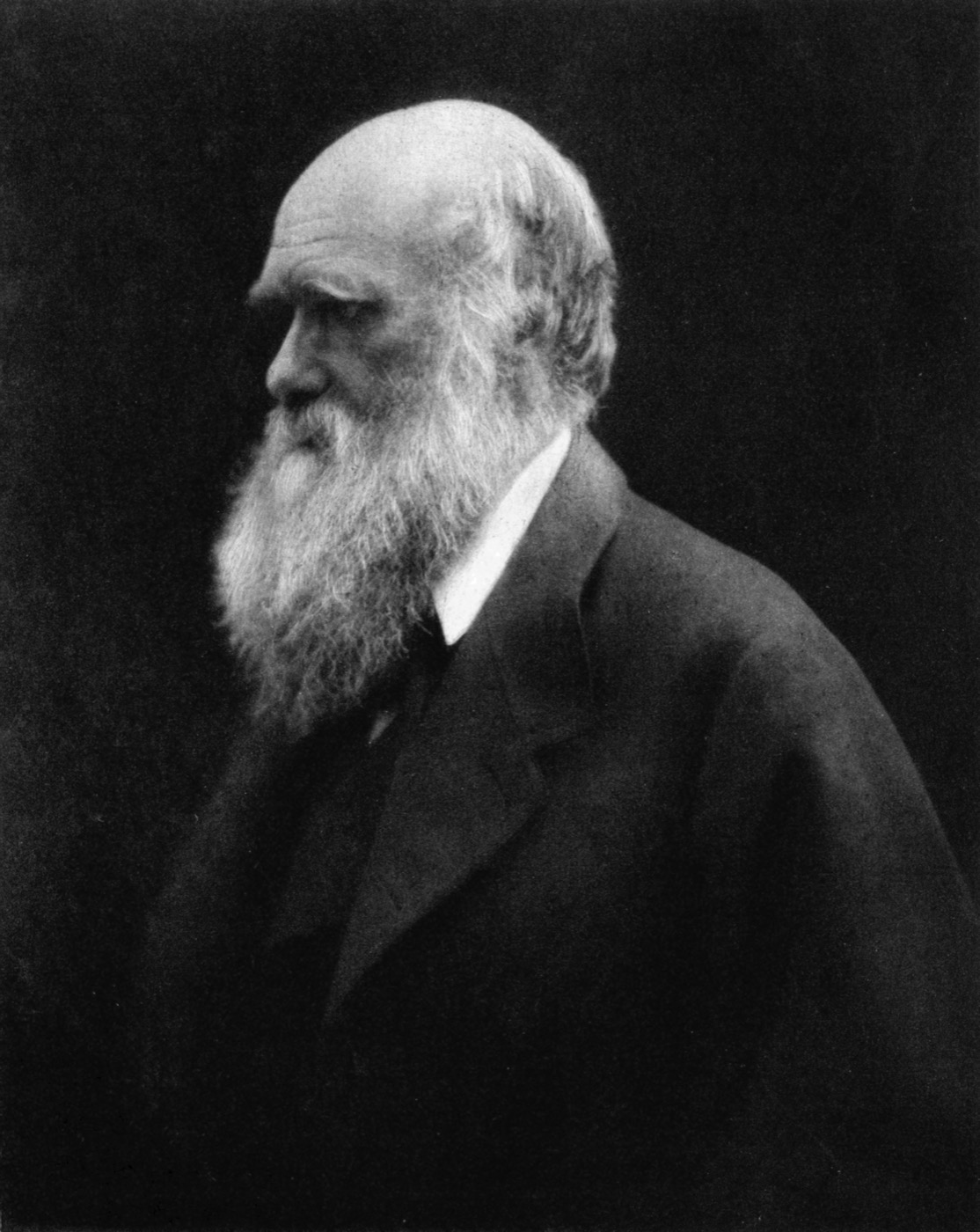
Charles Darwin published On the Origin of Species in 1859. He also wrote books on orchids, climbing plants, coral reefs, barnacles, human expression, and earthworms. It is the output of someone you would assume worked enormous hours.
He did not. On a good day he was finished by lunchtime.
We know this in unusual detail, because his son Francis wrote it down. Chapter III of The Life and Letters of Charles Darwin (John Murray, 1887) is titled "Reminiscences of My Father's Everyday Life," and it is a straight hour-by-hour account of the household by someone who lived in it. Most famous-routine pages are built on a magazine profile someone half-remembers. This one is built on a son describing his father's day, clock time by clock time.
The habit, precisely
- The Sandwalk was a loop, not a route. Francis describes it as "a narrow strip of land 1 1/2 acres in extent, with a gravel-walk round it", oaks and shade on one side, a low hedge and a view of a small valley on the other. Darwin planted it himself, with hazel, alder, lime, hornbeam, birch, privet and dogwood.
- He counted laps with flints, and later stopped counting. The famous sentence, in full: "In earlier times he took a certain number of turns every day, and used to count them by means of a heap of flints, one of which he kicked out on the path each time he passed. Of late years I think he did not keep to any fixed number of turns, but took as many as he felt strength for." The internet reliably quotes the first half. The second half is in the same paragraph and it changes the lesson.
- Two walks a day, at fixed times. The main one came around noon, after he had called the day's work done. It usually began with a stop at the greenhouse, though Francis notes he "hardly ever did any serious observing at this time." A second walk came at four, and he was so regular that Francis wrote "one might be quite certain it was within a few minutes of four when his descending steps were heard."
- The working day was short and broken into blocks. Breakfast alone about 7.45, then straight to work. Francis: he considered "the 1 1/2 hour between 8 and 9.30 one of his best working times." Letters and reading aloud until about 10.30, then work again "till twelve or a quarter past." Then a third block, "from about half-past four to half-past five."
Add the three blocks up: about ninety minutes, then about ninety minutes, then about sixty. Call it four hours of desk work. Francis records what his father said at the end of the second block, and the emphasis is Francis's own: he "would often say, in a satisfied voice, 'I'VE done a good day's work.'"
Around noon. Done.
What Francis actually wrote versus the version you have read
Three things get lost in the retelling, and all three are in the primary text.
The flint count was a phase, not the system. Retellings present the flints as Darwin's lifelong method. Francis says plainly that in later years there was no fixed number. What survived for decades was the walk at the same time on the same loop, not the tally.
The count was there so he did not have to count. This is the actually clever bit, and it is what the flints were for. Kicking a stone leaves the number in the gravel instead of in your head, so a lap can end without a decision. Francis does not spell out the reasoning, he reports the behavior, so we state the mechanism as ours, not his.
He was not walking to be productive. An account Francis quotes describes joining him for "his daily forenoon walk round the sand-walk," where the talk "usually ran on foreign lands and seas, old friends, old books, and things far off to both mind and eye." He watched birds. Children played there while he circled.
The part we will not dress up
Darwin was ill for most of his adult life, and his family said so directly. Francis wrote that "for nearly forty years he never knew one day of the health of ordinary men." He described his father's nights as "generally bad," lying awake "suffering much discomfort," troubled "by the activity of his thoughts." Darwin himself wrote that ill-health "has annihilated several years of my life."
What that illness was has been argued over for more than a century. We are not going to guess. What matters here is the direction of the arrow, and it points the way nobody wants: the short day and the fixed walk look far more like accommodations to being unwell than like a system he invented while healthy. Read this as a man who found the few hours he had and did not waste them.
His own night, by the family's account, was around 10.30 to early rising and often broken. That is not a target. HealthBrew's floor is at least seven hours, per the American Academy of Sleep Medicine and Sleep Research Society consensus (Watson et al. 2015). The lesson on this page is the short day, not the bad night.
What the science says
Walking helped a lab task about generating ideas, not the task about finding the one right answer. Oppezzo and Schwartz ran four experiments (Journal of Experimental Psychology: Learning, Memory, and Cognition, 2014). In Experiment 1 to 48 undergraduates, within-subject, walking on a treadmill raised 81% of participants' scores on Guilford's alternate uses test of divergent thinking, but only 23% of scores on compound remote associates, where there is a single correct answer. Experiment 4 used 40 adults, between-subjects. These are short lab tasks with mostly students. Nobody has shown a walk improves your actual work, and we cover that in more detail on celebrities who walk every day.
The walking volume associated with lower mortality is lower than the usual slogan. In 2,110 middle-aged adults wearing accelerometers in the CARDIA prospective cohort, followed a mean of 10.8 years, roughly 7,000 or more steps a day was associated with lower all-cause mortality, hazard ratio 0.28 for the moderate group and 0.45 for the high group (Paluch et al. JAMA Network Open, 2021). It is observational. Healthier people also walk more, and this design cannot separate the two. Notably, the study found no significant association for stepping intensity, so the pace Francis describes, a swinging stride that in later years "was kept up by something of an effort", is not the variable.
Missing one day does not undo the habit. From Lally et al. (2010), the study everyone cites for "66 days": that median came from 39 people whose data fitted the model, with a range of 18 to 254 days. The line worth remembering from the same paper is the one nobody quotes, "missing one opportunity to perform the behaviour did not materially affect the habit formation process." Which is exactly what Francis describes happening: the fixed count dropped away, and the walk stayed for the rest of Darwin's life.
How to run it yourself, starting tonight
- Put a 90-minute block in tomorrow's calendar, starting within 15 minutes of when you begin work. Darwin called 8.00 to 9.30 one of his best working times, and he took it first, before letters. Most people give that slot to email.
- Pick one loop and never pick again. Around the block, around a park, one length of a street and back. Darwin walked the same 1.5-acre circuit for forty years. The decision you are removing is where, and it is the one that kills walks.
- Set the second block at a clock time, not a feeling. His was half-past four to half-past five, one hour. Francis's whole point about four o'clock is that it did not depend on how the day was going.
- Give yourself a count you can see, not one you hold. Three stones on a wall, three coins in your left pocket moved to your right at each lap. That is the flint trick, and it works because you stop tracking.
- Say the day is over out loud, and mean it. He said "I've done a good day's work" around noon. Name your own end time tonight, 4pm, 6pm, whenever, and when you hit it, stop. That sentence is the habit. The walk was just what he did next.
The mistakes that kill this habit
- Treating the lap count as the point. It was the scaffolding, and Francis says he dropped it. Keep the loop, lose the tally when you no longer need it.
- Scheduling the walk for after the work is done. It never is. His was wedged between blocks, at fixed times, which is why it survived.
- Making the block longer because it went well. Four hours across three sittings, then out the door. Stretching the good day is how you fail to want the next one.
- Turning the walk into a call. He used it for foreign lands, old friends, and old books. A phone call is a fourth block wearing shoes.
- Copying the sleep. Bad nights were his illness, not his method.
Where HealthBrew fits
HealthBrew is built around closing a day rather than chasing a streak. Darwin had a sentence for it, a specific one, said out loud, around noon. Most of us do not, so the day just leaks into the evening. If naming the end of a day and marking it is the thing you want to try, there is one simple membership.
Educational and behavioral only. This is not medical advice. Charles Darwin died in 1882; his illness is described here only as his family described it in print, and nothing on this page should be read as a claim about its cause, its treatment, or its effect on his life or death. Every quotation comes from Francis Darwin's "Reminiscences of My Father's Everyday Life," Chapter III of The Life and Letters of Charles Darwin (John Murray, 1887), read in full in the public-domain Project Gutenberg text (ebook 2087).
And the survivorship line: we wrote this page because Darwin's books lasted. Thousands of Victorians kept a fixed walk and a short working day, and we know none of their names. The routine is not why he was Darwin. It is just the part of him you can actually copy.
Common questions
Did Charles Darwin really count laps of the Sandwalk with flints?
Yes, and the primary source is his son. Francis Darwin, in "Reminiscences of My Father’s Everyday Life" (The Life and Letters of Charles Darwin, John Murray, 1887), wrote: "In earlier times he took a certain number of turns every day, and used to count them by means of a heap of flints, one of which he kicked out on the path each time he passed." The half that rarely gets quoted follows immediately: "Of late years I think he did not keep to any fixed number of turns, but took as many as he felt strength for." So the flint count is real and it is documented, but it was an earlier phase, not a lifelong system.
How many hours a day did Charles Darwin actually work?
By his son’s account, about four, in three blocks. Francis Darwin records breakfast alone about 7.45, then work, he considered "the 1 1/2 hour between 8 and 9.30 one of his best working times." Letters and reading aloud followed until about 10.30, then work again "till twelve or a quarter past," at which point he considered the day’s work over and would say, in a satisfied voice, "I’VE done a good day’s work." A third block ran "from about half-past four to half-past five." Francis is describing the household of Darwin’s later decades, not his whole life, so treat it as the mature routine rather than a lifetime average.
Does walking actually make you think better?
The best-known evidence is narrower than the slogan. Oppezzo and Schwartz (Journal of Experimental Psychology: Learning, Memory, and Cognition, 2014) ran four experiments; in Experiment 1, 48 undergraduates within-subject, walking raised 81% of participants’ scores on a divergent-thinking task (Guilford’s alternate uses) but only 23% on compound remote associates, which has one right answer. Experiment 4 used 40 adults between-subjects. These are short lab tasks with mostly students, so the useful reading is narrow: walk when you want more options, not when you are trying to land on the single correct one. Separately, roughly 7,000+ steps a day was associated with lower all-cause mortality in 2,110 adults in the CARDIA cohort over a mean 10.8 years (Paluch et al. JAMA Network Open, 2021), observational, so association only.
Start Compounding Your Habits Tonight.
Use the free reflection generator to log your day. Let your AI companion coach help you find your baseline and have more days you would want again.
Produce OutcomesRelated guides
Want more days like theirs — measured on your own life?
HealthBrew is a physician-built longevity habit tracker. Close your day in about 60 seconds; your AI companion coach finds what your best (“green”) days have in common. Educational self-reflection — not medical advice.
Close tonight · ~60 seconds