Toni Morrison’s Writing Routine (2026): She Wrote Before Dawn, But the Hour Was Never the Point
Everyone quotes the coffee and the dark. Almost nobody quotes the sentence right after it, which is the only part you can actually use.
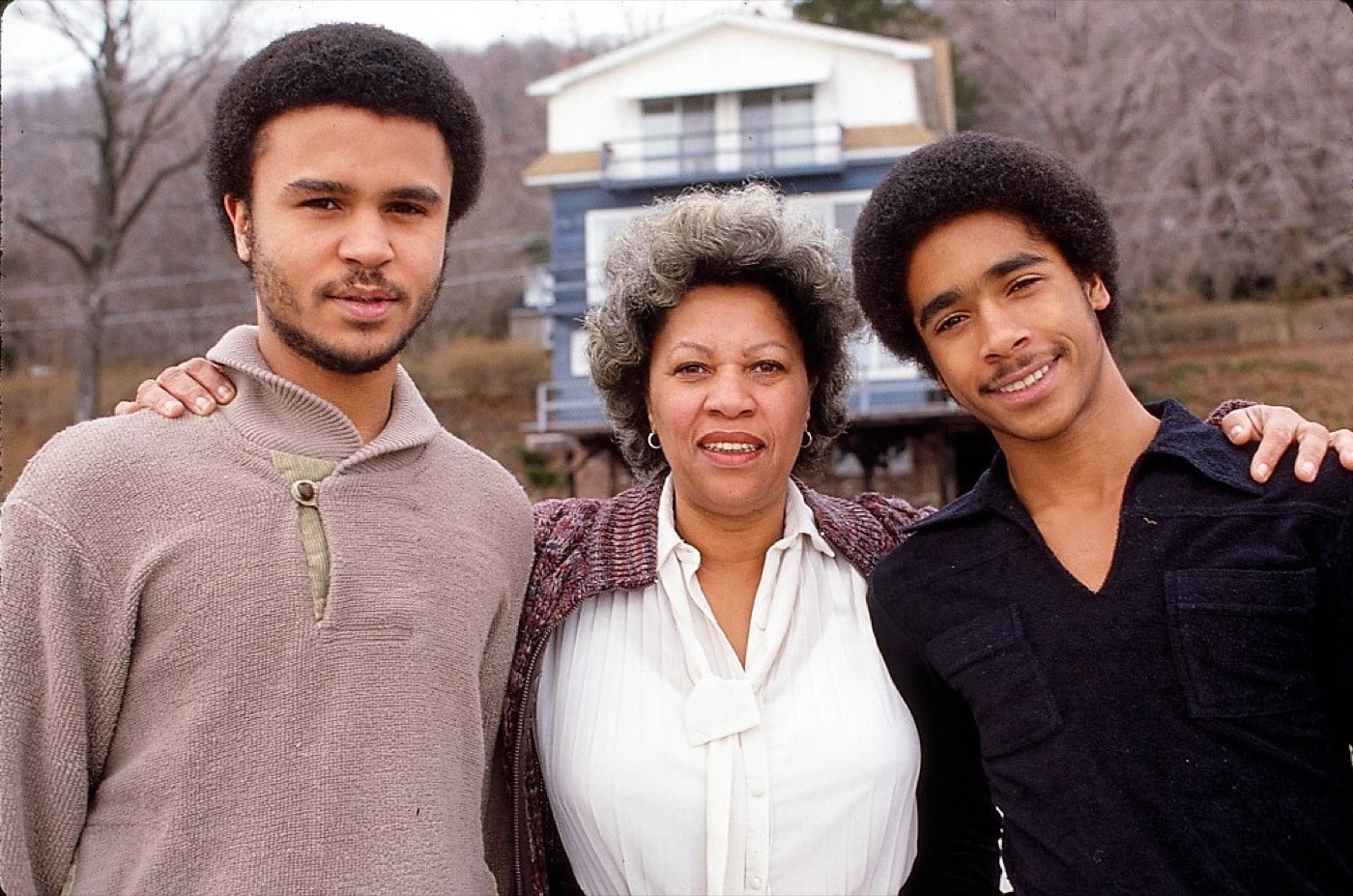
Toni Morrison wrote The Bluest Eye while raising two sons on her own and holding down a nine-to-five. She told The Paris Review that Holt published it, and that Random House, where she worked, did not know about it until the Times reviewed it. She did not have a writing room or a sabbatical or a quiet house. She had the hours before her children woke up.
She won the Pulitzer Prize for Beloved and the Nobel Prize in Literature in 1993. That same year she sat down with Elissa Schappell, with Claudia Brodsky Lacour, for The Paris Review, The Art of Fiction No. 134. The interviewer's question was specific: had the pre-dawn habit begun for practical reasons, or was early morning an especially fruitful time for her?
Her answer started with the practical part: "Writing before dawn began as a necessity, I had small children when I first began to write and I needed to use the time before they said, Mama, and that was always around five in the morning."
That is the honest origin. Not discipline. Two boys who would need her the moment they woke, and a job she had to be at later. She told the same interviewers that at Random House she never said she was a writer, she thought they would have fired her.
We already have a page on the protected quiet hour as a method. This one is about the sentence she said next, which almost every retelling drops.
The ritual she did not know she had
Later in the same answer, Morrison described a conversation with another writer, she does not name her, who did something at her desk before starting work. Morrison hedges the detail herself: she says she does not remember exactly what the gesture was. What she does remember is that it made her think about the small things writers do before writing. Her account, in full:
"I, at first, thought I didn't have a ritual, but then I remembered that I always get up and make a cup of coffee while it is still dark, it must be dark, and then I drink the coffee and watch the light come. And she said, Well, that's a ritual."
She had been doing it for years without calling it anything. Somebody else had to name it for her.
Then comes the line that makes this page worth writing: "For me, light is the signal in the transition. It's not being in the light, it's being there before it arrives. It enables me, in some sense."
She is not saying dawn is a magical writing hour. She is saying she had a signal, a reliable, repeated thing that told her which mode she was about to be in. Coffee, dark, waiting: now I am the person who writes.
The habit, precisely
- A window nobody else had a claim on. Around five in the morning, before her sons were awake. She named the reason herself: she needed the time before they said, Mama.
- The same opening action, every time. Get up, make a cup of coffee. Not a variable routine. The same four minutes.
- A fixed condition attached to it, and she insisted on it. "while it is still dark, it must be dark." Those three words in the middle of her own sentence are the strongest evidence that the cue mattered to her, not just the hour.
- Sit with it and wait. Drink the coffee, watch the light come. Being there before it arrives, in her words, was the part that enabled her.
One more thing she said in that interview, which cuts against the tidy version of her: "I am not able to write regularly. I have never been able to do that, mostly because I have always had a nine-to-five job." The signal was consistent. Her schedule was not. If you have been told she wrote every morning like clockwork for decades, she said otherwise herself.
What the science says
Repeating a behavior in a consistent context is what builds automaticity, the context is not decoration. In the University College London study, 96 volunteers each chose an eating, drinking or activity behavior to carry out daily in the same context, the paper's own example is "after breakfast", for 12 weeks (Lally et al. European Journal of Social Psychology, 2010). The design point matches Morrison: nobody was told to try harder, they were told to attach the behavior to a fixed cue. The authors' conclusion is careful: "repeating a behaviour in response to a cue appeared to be enough for many people to develop automaticity for that behaviour."
The famous 66-day figure rests on far fewer people than you have been told. Everyone quotes "66 days" and nobody quotes the denominator. Of the 96 volunteers, 82 gave enough data to analyse. The curve model fitted for 62 of them, and of those, 39 showed a good fit. The median time to reach 95% of the automaticity plateau, 66 days, range 18 to 254, is calculated on those 39 people, self-reported, mostly postgraduate students with a mean age of 27. Treat it as a rough order of magnitude, not a countdown.
Missing a day is not the disaster the internet says it is. The same paper found that "missing one opportunity to perform the behaviour did not materially affect the habit formation process." Streak anxiety is not supported by the study people cite when they push streaks.
How consistent your cue needs to be is genuinely unknown. The authors say so in their own conclusion: "Although consistency in repetition is required, the degree of consistency is not yet known." Be honest about what this literature is, a small number of self-report studies about drinking water and doing sit-ups. Nobody has run a controlled experiment on whether a fixed cue makes a novelist write better. What the evidence supports is modest: repetition in a stable context makes a behavior easier to start. It does not promise the behavior will be any good.
Why a signal beats a schedule
A schedule tells you when. A signal tells you what you are about to do. People skip the second one.
Starting is where the failure happens. Almost nobody sits down at the right time and then fails to work, they fail to sit down. A fixed opening action removes the decision. You are not deciding to write, you are making coffee, and the writing happens on the other side of the coffee.
Her cue had a second advantage: it was locked to something outside her control. The light comes when it comes. You cannot snooze sunrise or push it to the afternoon. Most self-made cues are softer than that, which is probably why most of them do not hold.
And her hour was quiet not because early mornings are holy, but because everyone she loved was asleep. If your house is empty at 8pm, that is your hour.
Morrison's switch was a moment. Maya Angelou's was a place, a bare hotel room she rented by the month in her own town, with the pictures taken off the walls. The two pages do not disagree: neither writer said the hour on the clock was the point. Morrison had two small children and no spare room, so she used a moment. Angelou used an address.
How to run it yourself, starting tonight
- Pick one action that takes 2 to 4 minutes and always comes before the work. Filling the kettle. Sharpening a pencil, which is what she actually wrote with, number two, on yellow legal pads. One lamp on, overheads off. It has to be the same one every time, or it is not a signal.
- Attach it to a fixed condition you do not control, the way she attached hers to darkness. Before anyone else in the house is up. Before you open any app. The stronger the condition, the less you get to argue with it.
- Put the window in your calendar tonight as a repeating event, with a name. Thirty minutes is plenty to start. An unnamed intention loses to any real meeting.
- Do not take the hour out of your sleep. The American Academy of Sleep Medicine and Sleep Research Society jointly recommend adults regularly sleep 7 or more hours (Watson et al. SLEEP, 2015). If you want an early window, move your bedtime back first and give it a week before you touch the alarm. An earlier alarm on the same bedtime is a debt, not a habit, and it is not the lesson here.
- Give it eight weeks before you judge it, and do not restart the count when you miss a day. The median in Lally 2010 was 66 days among the 39 people it could model, and missing a single day did not materially matter.
The mistakes that kill this habit
Copying the hour instead of the mechanism. Five in the morning worked for her because that was when her sons were asleep. Lifted into your life, the hour is just a worse night's sleep.
Changing the opening action. Coffee one day, a shower the next, a podcast the next. A signal that varies is not a signal. Boring and identical is the whole design.
Putting anything with other people's demands inside the window. Email, messages, the news. She was there before the light arrived, at the front of the day, not responding to something already in motion. One inbox check and the window belongs to someone else.
Expecting the ritual to do the work. It gets you into the chair. That is all it does. Morrison's talent was hers, and the coffee did not supply it.
Waiting until your life is calmer. Hers never was. Full-time job, two children, no writing room, and by her own account no ability to write regularly. She took the window anyway.
Where HealthBrew fits
The hard part is not the signal. It is finding out which one actually precedes your good days, because you cannot see that from inside a single day. HealthBrew's nightly close takes about sixty seconds, a color for the day and a few honest lines. After a few weeks, your AI companion coach reads it back and tells you what your better days had in common. Same move Morrison made, except she had to hold years of it in her head and wait for another writer to point it out. Membership, cancel anytime.
Educational content, not medical advice. Sources: Toni Morrison, interviewed by Elissa Schappell with Claudia Brodsky Lacour, "The Art of Fiction No. 134," The Paris Review, issue 128, Fall 1993, all Morrison quotes on this page are from her own answers in that interview, read in full. Lally, van Jaarsveld, Potts & Wardle, European Journal of Social Psychology 40(6), 2010, read from the published PDF. Watson et al. SLEEP, 2015. Toni Morrison died in 2019; nothing on this page suggests any habit of hers affected her health. We wrote about her because she won a Nobel Prize, thousands of people keep a quiet early hour and never publish a word, and the ritual worked exactly as well for them at getting them into the chair.
Common questions
What was Toni Morrison’s writing routine?
In The Paris Review, The Art of Fiction No. 134 (1993, interviewed by Elissa Schappell with Claudia Brodsky Lacour), she said writing before dawn "began as a necessity, I had small children when I first began to write and I needed to use the time before they said, Mama, and that was always around five in the morning." Her ritual was to get up, make coffee while it was still dark, drink it and watch the light come. In the same interview she also said she was never able to write regularly, because she always had a nine-to-five job.
Did Toni Morrison say the early hour itself was important?
No, she said the opposite, and this is the most-skipped line in the interview. Her words were: "For me, light is the signal in the transition. It’s not being in the light, it’s being there before it arrives." The mechanism she described was a consistent signal marking the transition into writing, not the number on the clock. She insisted on the condition, though, "it must be dark", which is why the cue, rather than the hour, is the part worth copying.
Does the science support building a habit around a fixed cue?
Modestly, and the evidence is smaller than usually claimed. Lally et al. (2010) had 96 volunteers repeat a chosen behavior daily in the same context for 12 weeks; the authors concluded that repeating a behavior in response to a cue was enough for many people to develop automaticity. But the well-known 66-day median comes from only the 39 participants whose data fit the model well, is self-reported, and ranged from 18 to 254 days. The authors also state that the degree of consistency required "is not yet known," and that missing one opportunity did not materially affect the process.
Start Compounding Your Habits Tonight.
Use the free reflection generator to log your day. Let your AI companion coach help you find your baseline and have more days you would want again.
Produce OutcomesRelated guides
Want more days like theirs — measured on your own life?
HealthBrew is a physician-built longevity habit tracker. Close your day in about 60 seconds; your AI companion coach finds what your best (“green”) days have in common. Educational self-reflection — not medical advice.
Close tonight · ~60 seconds