"Everyone Needs to Eat and Sleep Well" — The Kylian Mbappé Method
One of the most famous athletes alive was asked what needed to change. His answer was the least marketable sentence in sport: everyone needs to eat and sleep well.
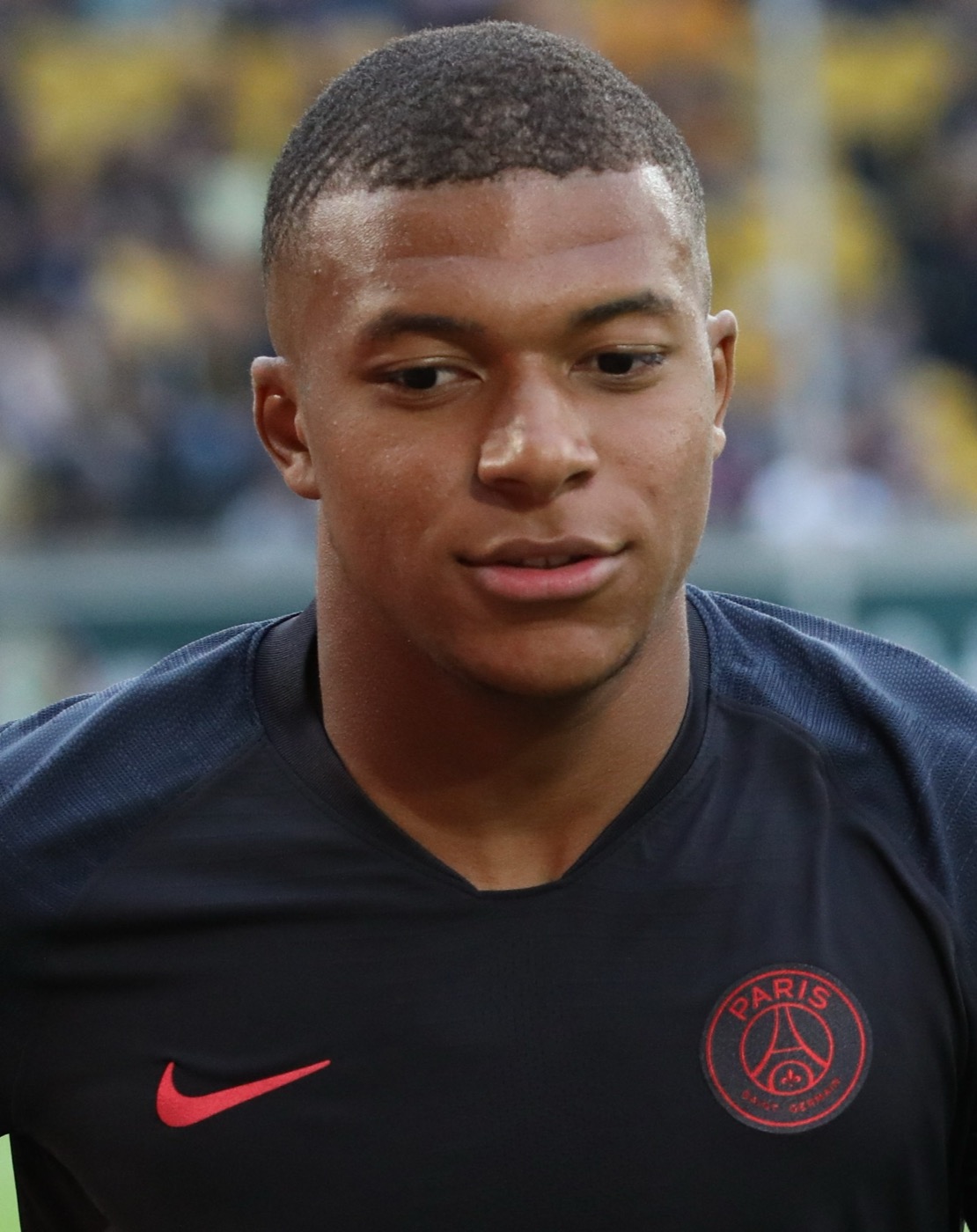
In February 2023, Paris Saint-Germain lost. Afterwards, Kylian Mbappé had a message for his teammates. It wasn't tactical. It wasn't a rallying speech.
"Everyone needs to eat and sleep well."
That's it. One of the most famous athletes on the planet, in front of the press after a defeat, saying the thing your grandmother says.
It matches what he actually does. He targets 8 to 9 hours a night — lights out around 11:45pm, up around 8am — plus an afternoon nap of roughly 90 minutes. He keeps the final 30 minutes before sleep screen-free, and he has called that one change among the most impactful things he did for his recovery. He doesn't drink alcohol. He eats clean, with minimal added sugar. A lot of his food is his mother's home cooking.
He put it to GQ France in 2024: "Clean food, no excess sugar, no alcohol. This is the discipline."
This is the story that fits our whole argument best, and here's why. A global superstar with access to anything money can buy says, out loud, that his recovery comes down to two things anyone can do for free. No protocol. No stack of supplements. No gadget.
Same caveat as always. Mbappé is one of the fastest people ever to play football, with elite coaching and enough money that his whole day gets built around performance. He can nap at 2pm because that's his job. You can't copy the talent. You can copy the 30 minutes without a phone.
The habit, precisely
- A sleep window with fixed edges. Around 11:45pm to 8am, so 8 to 9 hours. Set in advance. The times are decided and the day gets arranged around them.
- A nap that's in the plan. About 90 minutes in the afternoon. Not collapsing on the sofa. Timetabled.
- No screens for the last 30 minutes. The half hour before bed has no phone in it. He's said this was the single change that helped most.
- Clean food, no alcohol, barely any added sugar. Home cooking by default. Not a diet phase. Just how things are now.
Four rules. None of them cost anything. All of them are boring.
What the science says
Seven hours is the floor, and most adults are under it. The American Academy of Sleep Medicine and the Sleep Research Society, through a formal consensus process, concluded adults should regularly sleep 7 or more hours, and that regularly sleeping less goes with worse health (Watson et al., SLEEP, 2015). That's a group of experts reading mostly observational evidence, so treat it as a well-backed recommendation, not a proven dose. Mbappé's 8 to 9 sits comfortably above the floor.
Giving athletes more sleep has been studied once, in a tiny study. Mah and colleagues had Stanford basketball players sleep more and reported faster sprints, better shooting and quicker reactions (Mah et al., SLEEP, 2011). It was 11 players with no control group. That one study is behind most "athletes should sleep more" headlines. It can't separate the sleep from practice or from expecting to improve. Interesting, badly over-quoted, and worth knowing the size of before you repeat it.
Screens in the evening go with later bedtimes and less sleep. A review of screen time and sleep in children and teenagers found the same pattern across the literature (Hale & Guan, Sleep Medicine Reviews, 2015). A link, not a cause, and in young people rather than adult footballers. It backs the shape of Mbappé's rule without proving why it works. He's telling you what he noticed. The research points the same way.
Cooking at home changes what you eat. Among about 9,500 US adults, the ones who cooked dinner at home more often ate fewer calories, less sugar, less fat and less fast food — even the ones with no plan to lose weight (Wolfson & Bleich, Public Health Nutrition, 2015). Observational. And the reason is dull and believable: the processed stuff isn't in the room. Mbappé eating his mother's cooking is that finding with a face on it.
The way of eating has trial evidence behind it too. PREDIMED randomized about 7,400 at-risk adults and found roughly 30% fewer major cardiovascular events on a Mediterranean-style pattern than on a low-fat one (Estruch et al., New England Journal of Medicine, 2018 republication). In plain terms, under one fewer event per hundred people over about five years. Real, and worth having. Not magic. The trial was pulled and republished after problems with how people were enrolled, and it only looked at people already at risk.
Habits stick through doing the same thing in the same place. Lally's UCL team enrolled 96 people starting a daily habit. The famous figure is a median of 66 days to feel automatic, range 18 to 254, over the 39 whose curves the model fitted (Lally et al., European Journal of Social Psychology, 2010). Simple actions got there faster. And missing one day made no measurable difference. A fixed bedtime and a fixed phone cutoff are exactly the kind of simple, repeated thing that study says settles in fastest.
What this story can't prove. His sleep schedule didn't make him fast and it didn't make him finish chances. That's genes, years of elite coaching, and a job that clears every obstacle between him and recovery. Plenty of players sleep nine hours and never get a Champions League minute. Here's the smaller claim that holds. What he describes points the same way the evidence does: enough sleep, less light and less screen in the evening, food cooked at home, hardly any added sugar. Anyone can go that direction. Nobody can copy the career.
Why the boring version is the one that works
There's a reason nobody sells the Mbappé method. You can't monetize "go to bed at the same time and put your phone down."
But look at what those four rules actually do. They take decisions away. A fixed lights-out means you don't argue about bedtime every night. A phone cutoff means you don't lose forty minutes to a feed you never meant to open. Cooking at home by default means the processed food never gets into the week at all. No alcohol wipes out a whole category of decision, and the bad sleep that comes with it.
Every one of those is decided once and then just done, instead of decided fresh every night when you're tired and worst at deciding.
That's the trick. Not more willpower in the moment. Fewer moments that need any.
How to run the method yourself, starting tonight
- Pick a lights-out time by working backwards. Take the wake time you actually need, subtract eight hours, that's lights-out. His is 11:45pm for an 8am wake. Yours is just arithmetic.
- Phone out of the bedroom 30 minutes before that. Charge it in another room. This is the exact change he says mattered most, and it costs nothing. If you use it as an alarm, buy an £8 clock.
- Cook dinner at home one more night a week than you do now. One night. That's the move. In the Wolfson data the processed calories fall out by themselves.
- Cut one source of sugar completely and make it a rule. For most people, sugary drinks. Not "less." A rule, so it stops being a nightly vote.
- Nap 20 minutes or 90. Never 45. If your day has room for a nap, keep it short or make it a full cycle. The middle-length one leaves most people groggy. His is 90.
- Write down your bedtime and what you ate. Ten seconds, every night. Across 122 studies, writing your own behavior down beat not writing it down (Michie et al., 2009). And in a 1,685-person trial, daily food records went with about double the weight loss — with the honest caveat that everyone there also got weekly group support (Hollis et al., 2008).
The mistakes that kill this habit
Thinking the number of hours is the whole thing. Eight hours in bed with your phone in your hand until 11:40 isn't the routine. The 30 minutes before sleep is the bit he says mattered most, and it's the bit people skip.
Keeping the phone as your alarm. That one decision undoes the rule. Phone in the bedroom means phone in the bed. Buy the cheap clock.
Napping badly. A long, late, unplanned nap takes from that night's sleep and leaves you groggy at both ends. If it isn't planned and it's after about 3pm, skip it.
Starting all four rules on Monday. Four changes at once is how you end up with none by Friday. Lally's data says simple things settle fastest. Start with the phone cutoff. Add the next one in a month.
Deciding one bad night means it doesn't work. In the UCL study, missing a day made no measurable difference. What kills habits is quitting after the miss.
Where HealthBrew fits
HealthBrew is built on exactly the small nightly record this method needs. Sixty seconds to close the day, say how it went, and mark whether the phone actually went away. A few weeks later you can see which nights come before your good days. Nobody can see that from inside one Tuesday. Membership, cancel anytime.
Worth remembering: we wrote about Mbappé because he's a star, and that's a skewed way to choose. Loads of people go to bed at the same time and leave the phone in the kitchen and never get written about. They just get more decent days in a row, which is the actual prize.
Educational content, not medical advice. If you sleep the hours and still wake exhausted, that's a conversation for a doctor, not a routine.
Common questions
Is putting the phone away 30 minutes before bed actually backed by evidence?
Partly. A systematic review of screen time and sleep in children and adolescents found evening screen use consistently associated with later bedtimes and shorter sleep (Hale & Guan, Sleep Medicine Reviews, 2015). That is association, in young people, not proof of cause in adults. Mbappé is describing what he noticed in himself; the literature points the same direction without proving the mechanism.
How long should a nap be?
Either short or a full cycle. Mbappé naps around 90 minutes, which is roughly one complete sleep cycle. The common problem is the middle-length nap, which tends to leave people groggy on waking. If a nap is not timetabled and it is late in the afternoon, it is likely to cost you that night.
Do I need to give up alcohol to copy this?
No — this is educational content, not a prescription, and the method here is about removing nightly decisions rather than any one rule. Mbappé is describing his own discipline. The transferable principle is that a standing rule takes less effort than a nightly negotiation, whatever rule you choose.
Start Compounding Your Habits Tonight.
Use the free reflection generator to log your day. Let your AI companion coach help you find your baseline and have more days you would want again.
Produce OutcomesRelated guides
Take the habit with you.
Close your day in 60 seconds and watch the green days stack. On the App Store, and the price you see is the one for your country. Cancel anytime.