Ten Hours and a Dark Room — The Erling Haaland Sleep Method
Most elite athletes talk about training. Haaland talks about the light. Orange glasses after nine, a cold dark room, and sun in his eyes first thing.
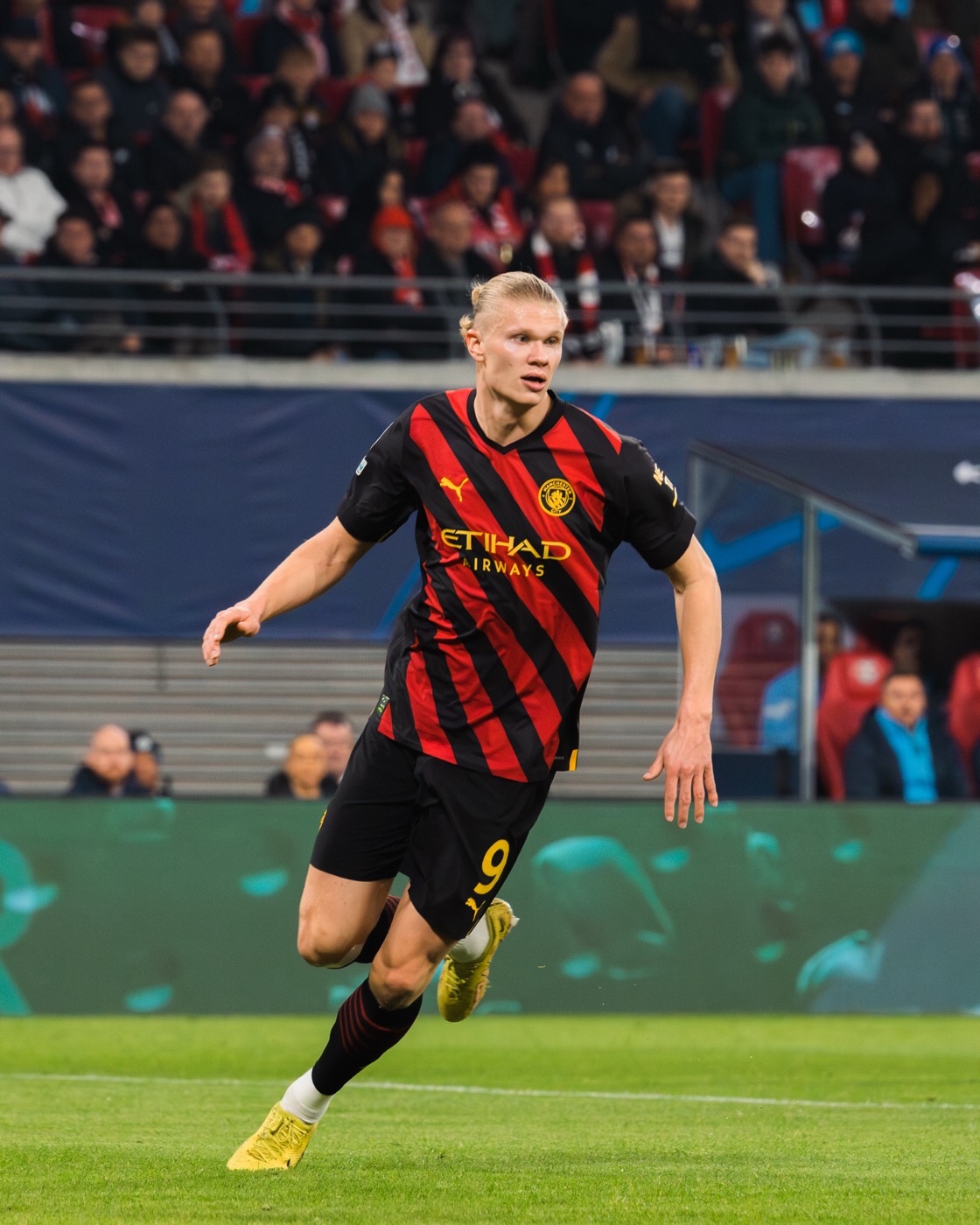
Erling Haaland scores so often that people go back and check the numbers twice. When interviewers ask what he does differently, he keeps giving the same boring answer. He sleeps.
Not seven hours. Around ten. And it isn't just the number. In his own words, across interviews including the Impaulsive podcast, the routine has parts: blue-light-blocking glasses for roughly three hours before bed — on after about 9pm. A room kept cool and dark. And in the morning, daylight straight into his eyes, early.
That is all of it. Glasses on, room cold and black, sun in the face at wake-up.
One thing we're leaving out on purpose. Haaland has also talked about taping his mouth shut at night. We're not recommending that. The evidence for mouth taping is thin, and there's a real safety problem: if you have undiagnosed sleep apnea or a blocked nose, taping your mouth shut is the wrong move. Skip it. Nothing else here depends on it.
And be honest before the science starts. Haaland is 6'4", built like almost nobody else, coached by professionals, and paid to recover for a living. His day is arranged so ten hours fits. Yours probably isn't. Sleep is not what made him Haaland — that was born, coached and bought. What you can copy is the light routine. It costs about twenty pounds and ten minutes a day.
The habit, precisely
- A long sleep window he protects. Around ten hours, treated as part of the job instead of whatever's left at the end. It's booked in, not hoped for.
- Less light in the evening. Blue-blocking glasses go on around 9pm, about three hours before bed. The glasses aren't the point. The point is that the last three hours are dimmer than the rest of the day.
- A cool, dark room. Two things you set once. They work every night and you never think about them again.
- Bright light in his eyes when he wakes up. Daylight, early, on purpose. Most people skip this half, and it's the half that holds the other half in place.
What the science says
Adults need at least seven hours, and most don't get it. The American Academy of Sleep Medicine and the Sleep Research Society ran a formal consensus process and concluded adults should sleep 7 or more hours per night on a regular basis, with regularly sleeping less linked to worse health (Watson et al., SLEEP, 2015). Know what that is: a group of experts reading a pile of mostly observational evidence, not one experiment. And know what it isn't. It's a floor, not a target. Ten is above the floor, not demanded by it.
Giving athletes more sleep has been studied once, in a tiny study. Cheri Mah's team at Stanford had basketball players sleep longer and measured sprint times, shooting accuracy and reaction time. Everything got better (Mah et al., SLEEP, 2011). Say the size out loud, because people quote this like it was huge: 11 players, no control group. With that setup you can't separate the sleep from practice, from expecting to improve, or from just knowing you're being watched. It's an interesting study that launched a thousand headlines. Encouraging early data, not a settled result.
Evening screens and light go with later bedtimes and less sleep. A review of screen time and sleep in school-age kids and teenagers found the same thing over and over: more evening screen use, later bedtime, less sleep (Hale & Guan, Sleep Medicine Reviews, 2015). That's a link, not proof of cause, and it was in young people. It doesn't show that any particular pair of orange glasses fixes anything. It does back the plain version of the habit — make the last few hours quieter and dimmer than the rest of the day.
Morning light is the main signal your body clock reads. The research is consistent on the basic point. Light sets the human clock more than anything else, and bright morning light tends to pull it earlier while bright night light pushes it later. That's as strong as the claim gets — a well-known mechanism, not a promise about your Tuesday. It's why the morning half isn't decoration. Blocking evening light and never getting morning light is doing half the job.
What this story can't prove. Sleeping ten hours didn't make Haaland score goals. He's a physical outlier, coached by professionals, in a job built around recovery. He also has no small children, no commute and no second job. His sleep and his goals go together in his biography, not in any study. Here's what does hold up. Adults who regularly sleep under seven hours do worse (Watson 2015). Evening light goes with later, shorter sleep (Hale & Guan 2015). Morning light is the anchor for body-clock timing. All three are true whether or not you ever get ten hours.
Why the light half matters more than the hours half
Most people trying to sleep better attack the number. They get into bed earlier, lie there, and get frustrated.
The light routine goes after something else. It isn't about more time in bed. It's about moving the moment your body decides it's night.
Bright light at 11pm and a dark bedroom at 7am tell your body it's still afternoon in the evening and still night in the morning. So you're tired at the wrong times. You push bedtime later. Then an alarm drags you out of a body that isn't done. Then you're rushing, so you get no daylight, and tomorrow is worse.
Bright morning and dim evening break that from both ends. And unlike "sleep ten hours," you can actually do it on a normal Tuesday with a job.
How to run the method yourself, starting tonight
- Get ten minutes of daylight outside within an hour of waking. Outside, not through a window — glass cuts most of it out. Cloudy counts. An overcast morning is still far brighter than your kitchen. Drink your coffee on the doorstep.
- Turn the lights down ninety minutes before bed. Big lights off, lamps on, screens on their dimmest setting. You don't need Haaland's three hours. Ninety minutes is a change you'll actually keep.
- Get the room cold and properly dark. Cold enough that you want the duvet. Dark enough that you can't see your hand. Blackout curtains or a £5 eye mask, and tape over the little standby lights.
- Pick one wake time and hold it, weekends too. The wake time is the anchor. Waking at the same time and getting light does more than anything you do at bedtime.
- Protect a seven-hour-plus window and write down what you actually got. Seven is the floor from Watson 2015. Writing it down matters — across 122 studies, that was one of the strongest things anyone measured (Michie et al., 2009).
The mistakes that kill this habit
Chasing ten hours and missing seven. Ten is Haaland's schedule, not a rule. Aim at something you can't reach and you'll give up on the thing you could have had. Get to a steady seven-plus first.
Doing the evening half and skipping the morning half. This is the common one. Orange glasses at night, curtains shut till nine, then wondering why nothing changed. Morning light is the anchor. Without it the evening work has nothing to hold on to.
Buying the glasses and changing nothing else. The glasses are a shortcut, not the thing that works. Turning the lights down and putting the phone away does the same job for free. If the glasses just let you keep the same bright, busy evening, you've paid for a placebo.
Be plain about this: the glasses haven't done well in trials. A 2023 Cochrane review of 17 randomized trials found blue-light-filtering lenses probably make no difference to sleep quality (Singh et al., Cochrane Database of Systematic Reviews, 2023). What has evidence behind it is less light and less stimulation late in the day. Glasses are one way to get there. Turning the lights off is another, and it's free.
Blowing up the wake time at weekends. A three-hour lie-in on Saturday shifts your clock the way a flight does. Then Monday feels like jet lag, because it basically is.
Copying the mouth taping. Saying it again because it's the bit that goes viral. Weak evidence, and a real risk if you have an airway problem nobody has spotted yet. Snoring that won't stop, or being wiped out all day, is a conversation with a doctor. Not a roll of tape.
Where HealthBrew fits
HealthBrew's nightly close takes about a minute: how the day went, and what you did. Log the light curfew and the wake time alongside it, and after a few weeks the pattern shows up on its own — which evenings come before your better days. That's the part no single night can tell you. Membership, cancel anytime.
And it's worth saying: we chose Haaland because he's famous for scoring goals. Loads of people get morning light and dim their evenings and nobody ever writes about them. They just sleep better and feel better on a normal Wednesday. That's the reason to do it.
Educational content, not medical advice. Persistent snoring, gasping, or daytime sleepiness deserve a doctor, not a routine. We deliberately do not recommend mouth taping.
Common questions
Do I actually need ten hours of sleep like Haaland?
No. The AASM and Sleep Research Society consensus is that adults should regularly get 7 or more hours (Watson et al., SLEEP, 2015) — that is a floor, not a target. Haaland is a professional athlete whose schedule is built around recovery. Getting a consistent seven-plus beats chasing ten and missing.
How strong is the evidence that more sleep improves athletic performance?
Weaker than the headlines suggest. The most-cited study, Mah et al. (SLEEP, 2011), extended sleep in Stanford basketball players and reported better sprint times and shooting accuracy — but it had 11 players and no control group. That design can not separate the sleep from practice effects or expectation. Encouraging, not established.
Why does morning light matter if the goal is better sleep at night?
Light is the dominant signal for the body clock, and morning light tends to pull that clock earlier while evening light tends to push it later. That is why the routine has two halves. Blocking evening light while getting no morning light leaves the clock unanchored. Ten minutes outdoors within an hour of waking is the practical version.
Start Compounding Your Habits Tonight.
Use the free reflection generator to log your day. Let your AI companion coach help you find your baseline and have more days you would want again.
Produce OutcomesRelated guides
Take the habit with you.
Close your day in 60 seconds and watch the green days stack. On the App Store, and the price you see is the one for your country. Cancel anytime.