Djokovic Morning Routine & Diet, in His Own Words
He has described his day twice, seven years apart, and the two versions agree on shape. The routine is real. Some of his explanations for it are not physiology, and we say which.
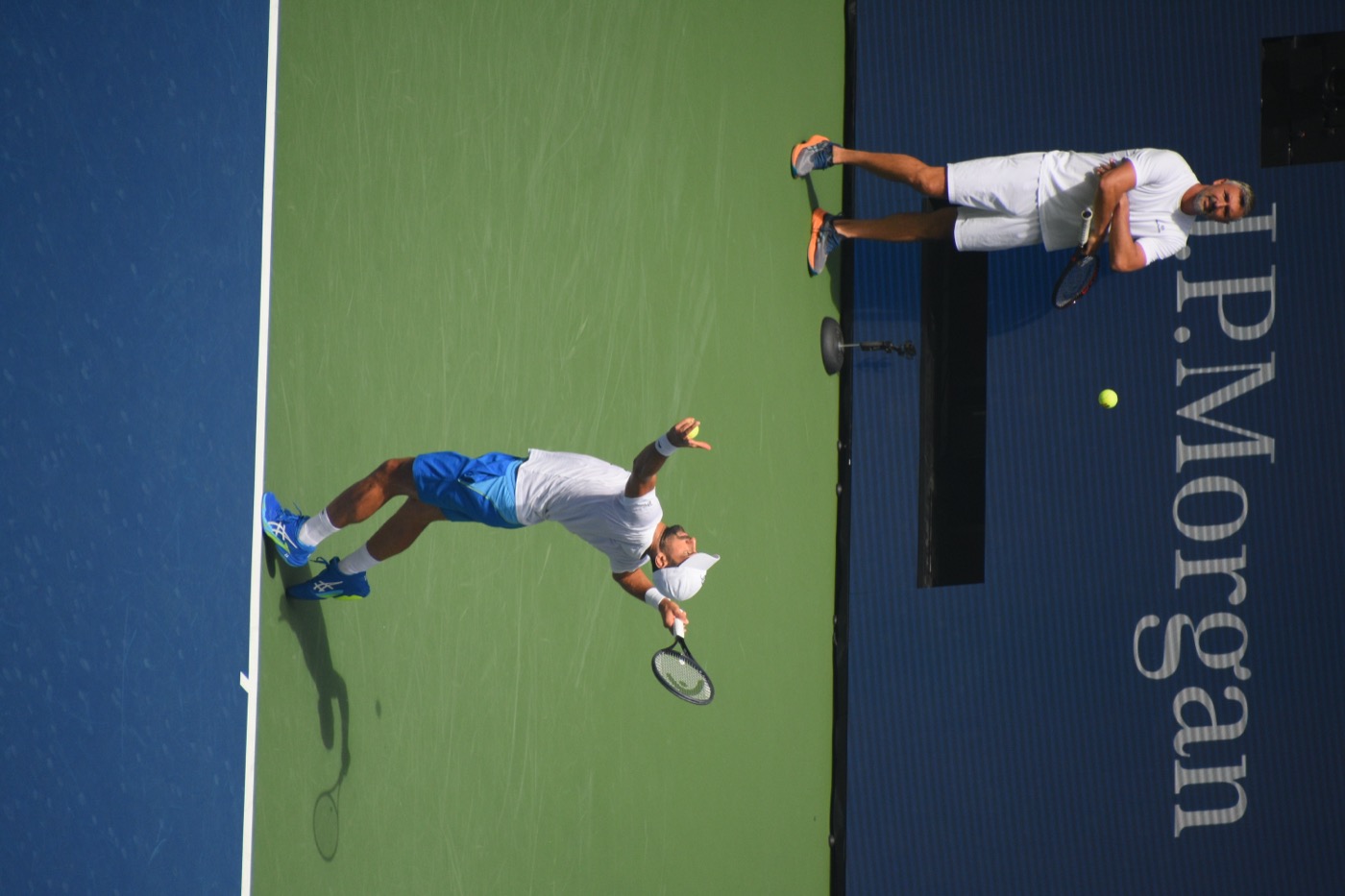
Novak Djokovic has won more major titles than any man in tennis history, and he has done something almost no athlete does: written his own day down. Once in his 2013 book Serve to Win, and again, seven years later, in a sit-down with Graham Bensinger's In Depth interview series.
That gives this page something rare. Not a blog's guess at his schedule, two dated accounts, in his voice, that we can compare. The shape holds across both: liquid before anything else, gentle movement, light food until training is done, protein at night.
It also gives us an obligation. Djokovic says things about water and energy that are not physiology, and most routine pages either repeat them as science or use them to mock him. We will do neither. What he does and what he believes about it are two different lists, and we keep them separate.
The routine, precisely
- Water before anything else. From the book: "The first thing I do out of bed is to drink a tall glass of room-temperature water." Room temperature on purpose: he argues ice water pulls blood to the gut to warm it up. By the Bensinger interview the liquid had changed but not the slot: "When I rise from bed, I start with warm water and lemon... and then I would have celery juice on an empty stomach."
- Two spoonfuls of honey. Also from the book: "The second thing I do might really surprise you: I eat two spoonfuls of honey. Every day. I try to get manuka honey, which comes from New Zealand."
- Stretch, then breakfast. He describes a full-body stretch after waking, sometimes with yoga or tai chi mixed in, then a bowl of gluten-free muesli or oatmeal with nuts, seeds and fruit. What goes in that bowl, and what never does, is its own story, told on our page about the 2010 diet change.
- Light food until the work is done. From the Bensinger interview: "I eat a lot of fruit during the first part of the day and salads. I don't like to eat any food that would require much energy for digestion... because that's when I need the most energy for my training." Grains like quinoa, millet and wild rice; sweet potato, steamed or boiled.
- Protein at night. The book puts meat or fish at dinner: "Later, when it's time for dinner, I eat protein in the form of meat or fish" : alongside vegetables, with the heavy eating deliberately parked at the end of the day.
Around the food sits the quiet stuff: daily meditation, which he describes at fifteen minutes a day in the book, we covered it separately in the Djokovic meditation method, and, per the 2018 ShortList profile, a gratitude journal. That profile also reports him meditating up to an hour a day by then. The fifteen minutes is his number, in his book; the hour is the journalist's summary, so we hold it looser.
What you will not find anywhere in his own accounts: a wake-up time. The precise timelines on routine blogs, up at 4:30, court at 8:00 sharp, trace to no interview we could locate, and we looked through the book excerpts, the Bensinger transcriptions and his press conferences. A tournament player's day moves with the match schedule. Treat every to-the-minute Djokovic timetable as invented.
The beliefs, and why we separate them
Djokovic explains parts of his routine in language that does not survive contact with evidence, and he has been open about it, so we can quote rather than speculate.
In a May 2020 Instagram Live with Chervin Jafarieh, he said: "I know some people that, through energetical transformation, through the power of prayer, through the power of gratitude, they managed to turn the most toxic food, or maybe most polluted water into the most healing water, because water reacts," adding that scientists had proven "that molecules in the water react to our emotions to what has been said." That idea traces to Masaru Emoto's water-crystal photographs, which were never replicated under controlled conditions. Water does not become healing because someone is grateful near it.
In a December 2018 ShortList interview he named "this thing called telepathy... Or this thing called telekinesis, or instinct, intuition," and added: "I feel like [these] are the gifts from this higher order, the source, the god, whatever, that allows us to understand the higher power and higher order in ourselves."
Here is the honest read. These are his beliefs, sincerely held, stated on the record, and they are not why the routine works, to whatever extent it works. A glass of water on waking hydrates you whether or not anyone prayed over it. Celery juice is mostly water with some salts; no trial shows it does anything a glass of water and a vegetable don't. "Detoxify" is his word, not a mechanism, livers and kidneys do that job unassisted. Honey is sugar with trace extras; his fructose-versus-sucrose distinction is not one nutrition science draws that cleanly. The behaviors are fine. The explanations attached to some of them are not evidence, and copying the routine does not require adopting them.
What the science says
The floor under any routine is sleep, and it has a number. A consensus panel of the American Academy of Sleep Medicine and the Sleep Research Society concluded adults should regularly get seven or more hours (Watson et al. SLEEP, 2015). Djokovic's own accounts never brag about short nights, the book frames sleep as non-negotiable, which puts him on the right side of the worst habit in this genre.
Meditation has moderate evidence at a modest size. A meta-analysis of 47 trials with 3,515 participants found mindfulness programs improved anxiety and depression with effects around 0.3, moderate evidence, and only low-strength evidence for "stress" generally (Goyal et al. JAMA Internal Medicine, 2014).
The gratitude journal is the weakest link, honestly stated. The best-known meta-analysis of expressive writing, 146 randomized studies, found a field-wide effect of r = .075, about a third of what popular books imply (Frattaroli, Psychological Bulletin, 2006). Cheap, harmless, mildly useful. Not a superpower.
Tracking your own behavior is the strongest-evidenced piece of any routine. A meta-analysis of 122 studies found interventions prompting self-monitoring outperformed those without it (Michie et al. Health Psychology, 2009). Djokovic's version is attention, he keeps describing noticing how food and sleep land, rather than a spreadsheet.
Why the sequence works better than a schedule
Notice what his routine is anchored to: not clock times, but order. Water happens because waking happened. Stretching happens because the water happened. Each action's cue is the one before it, which is why it survives time zones, night matches and nineteen years on tour, the one thing a 4:30-alarm routine cannot do.
That is copyable. The beliefs are optional; the sequencing is the machine.
How to run it yourself, starting tonight
- Put a full glass of water on the nightstand tonight. Tomorrow it goes down before your phone comes up. That is the whole first habit, and it costs nothing.
- Chain a two-minute stretch to the empty glass. Same stretch, every day, right after. Two minutes, not twenty, the anchor matters more than the dose.
- Set lights-out by counting back from your real wake time. Seven hours is the floor (Watson et al. 2015); 7.5 to 8 is the target. Recurring calendar event, weekends included.
- If you journal, two lines, and expect a small effect. What went well, what you noticed. The evidence says small (r = .075 across 146 studies), do it for the record it leaves, not for magic.
- Give the chain about two months before judging it. New behaviors took a median of 66 days to feel automatic among the 39 of 96 enrolled volunteers whose curves the model fitted, range 18 to 254 (Lally et al. 2010). Missing a single day did not measurably hurt habit formation in the same study.
The mistakes that kill this habit
Copying the beliefs instead of the behaviors. The water helps because you were dehydrated, not because it was charged with intention. If the routine only makes sense with the metaphysics attached, that is the wrong routine.
Buying it instead of doing it. Celery juicers, manuka at premium prices, algae powders. The expensive versions of his morning have no evidence over the cheap ones. Start with tap water and your own two minutes.
Adopting the whole day at once. Five new habits on a Monday is zero habits by Friday. One anchor, then chain.
Trusting a timetable. Any page giving you Djokovic's day to the minute made it up. His own accounts give an order, not a clock.
Reading "detox" as a plan. Nothing in this routine detoxifies anything. If you feel persistently unwell, that is a doctor conversation, not a juice decision.
Where HealthBrew fits
The transferable part of Djokovic's day is that each piece cues the next, and that he pays attention to what the day did. HealthBrew's nightly close is that attention in sixty seconds, what you did, how it landed, so after a few weeks the record is yours instead of someone else's timetable. Membership, cancel anytime.
One honest note to end on. Djokovic has a full-time team, a body in the top fraction of a percent, and total control of his working day. We wrote about him because he won 24 majors, and picking people because they won is a biased way to pick. Plenty of people drink warm lemon water every morning and hold no records at all.
Educational content, not medical advice. Book quotes are from Serve to Win (2013), read in the publisher-authorized press excerpts; the warm-water, celery-juice and training-day quotes are from his interview with Graham Bensinger's In Depth series, read in press transcriptions (Plant Based News, 2020) rather than heard from the broadcast; the water comments are from his May 2020 Instagram Live with Chervin Jafarieh as reported with direct quotes by UBITennis; the telepathy quote is from Matt Blake's December 2018 ShortList profile. Nothing here is a medical claim about disease, symptoms, or clinical outcomes.
Common questions
What is Novak Djokovic's diet and daily routine?
By his own two accounts, Serve to Win (2013) and his interview with Graham Bensinger's In Depth series, the shape is: liquid immediately on waking (a tall glass of room-temperature water in the book; warm water with lemon, then celery juice, by 2020), two spoonfuls of honey, stretching with some yoga or tai chi, a gluten-free muesli or oatmeal breakfast, light food such as fruit, salads and grains until training is done, and protein with vegetables at dinner. He also describes fifteen minutes of daily meditation in the book. He has never given a wake-up time, the to-the-minute schedules on routine blogs are not traceable to any interview.
Does the celery juice or manuka honey actually do anything?
Nothing that a glass of water and normal food don't. Celery juice is mostly water and has no trials showing benefits beyond hydration, and "detoxify", his word for it, is not a mechanism, since livers and kidneys already do that. Honey is sugar with trace extras. The parts of his routine with real evidence behind them are duller: seven or more hours of sleep (Watson et al. SLEEP, 2015, the AASM/SRS consensus) and self-monitoring, which beat non-monitoring interventions across a 122-study meta-analysis (Michie et al. 2009).
Did Djokovic really say people can purify water with their thoughts?
Yes. In a May 2020 Instagram Live with Chervin Jafarieh he said he knows people who "through the power of prayer, through the power of gratitude" managed to turn "the most toxic food, or maybe most polluted water into the most healing water," and that molecules in water react to emotions. The idea traces to Masaru Emoto's water-crystal claims, which were never replicated under controlled conditions. It is his sincere belief, stated on the record, and it is not why drinking water in the morning is a good habit.
Start Compounding Your Habits Tonight.
Use the free reflection generator to log your day. Let your AI companion coach help you find your baseline and have more days you would want again.
Produce OutcomesRelated guides
Want more days like theirs — measured on your own life?
HealthBrew is a physician-built longevity habit tracker. Close your day in about 60 seconds; your AI companion coach finds what your best (“green”) days have in common. Educational self-reflection — not medical advice.
Close tonight · ~60 seconds