The Tom Brady Sleep Schedule (2026): The 8:30 Bedtime, What He Actually Said, and the Part With No Evidence
Almost every famous routine we cover asks you to sleep less. This one is the rare exception, which is exactly why the rest of it deserves a harder look.
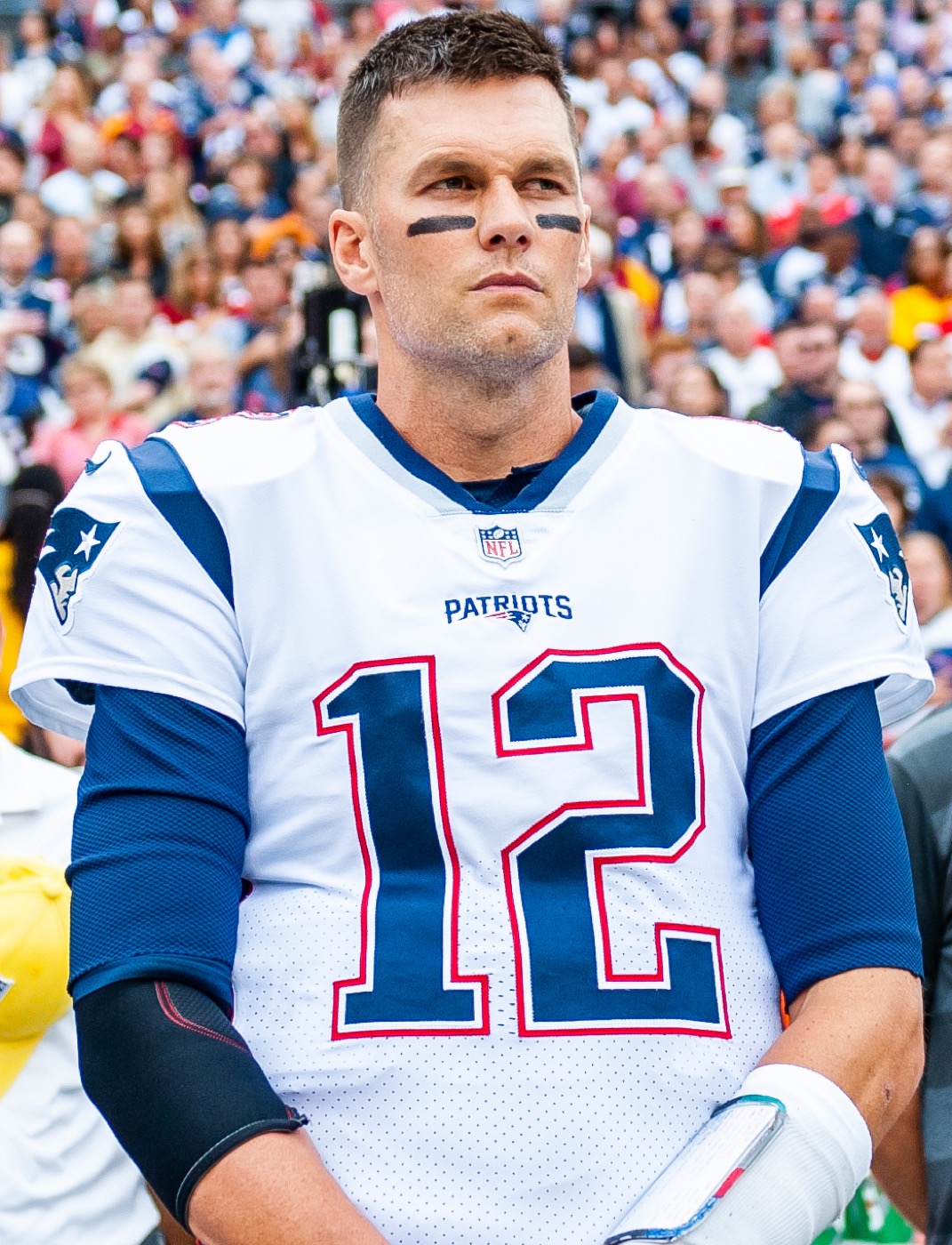
Tom Brady played quarterback in the NFL until he was 45, in a league where the average career runs about three years. He won seven Super Bowls. Whatever else you think of the man, the durability is real and unusual.
Most of the famous routines we look at here ask you to sleep less, the 4:30am wake-up, the five-hour night, discipline measured in sleep given up. Brady's headline habit is the opposite. He slept more than you do.
That makes this a strange page to write, because the sleep part is the good part. The trouble starts with everything he attached to it.
What he actually said, and what he did not
The 8:30 bedtime did not come from Brady. It came from ESPN's Bill Simmons, who in 2014 attributed it to Patriots receiver Julian Edelman. Teammate gossip, in other words, repeated ever since as a documented protocol.
Brady was then asked about it directly by WEEI in Boston in November 2014, and this is his whole answer in that interview:
"I do go to bed very early because I'm up very early. I think that the decisions that I make always center around performance enhancement, if that makes sense. So whether that's what I eat or what decisions I make or whether I drink or don't drink, it's always football-centric."
Notice what is missing. He confirmed very early. He never said 8:30.
Where a number does appear in his own words is his 2017 book, The TB12 Method, which describes a 9pm bedtime and a 6am wake-up, nine hours. Elsewhere he has been quoted at 9:15. In-season accounts have him up at 5 or 5:30, which would make it eight hours, not nine.
So the honest ledger:
- Early bedtime, roughly nine hours: verified. His own book, 2017, and his own words to WEEI, 2014.
- The precise 8:30: reported, not confirmed by him. It traces to a teammate, via a columnist. Brady's own answer to the question was "very early."
- A single fixed clock time held for twenty years, mythology. The published numbers drift between 8:30, 9:00 and 9:15, and the wake time drifts between 5:00 and 6:00. Routines pages print one of these as gospel by picking whichever one they read first.
That drift is not a scandal, it is what a real habit looks like from outside over two decades. But it means the thing to copy is the size of the night, not the minute on the clock.
The habit, precisely
- A night of roughly eight to nine hours, protected. Not aspired to. Built into how the evening ends.
- A bedtime early enough that a very early wake-up still clears the floor. This is the whole trick, and it is arithmetic, not willpower. He got up absurdly early and still slept plenty, because he went down absurdly early too.
- Screens off before bed. He has described shutting devices down ahead of sleep. This is the least exotic thing in the entire TB12 catalogue.
- The recovery sleepwear. Under Armour bioceramic pajamas, launched with Brady's endorsement at CES in January 2017, marketed as helping the body recover overnight. Covered below, because it does not hold up.
What the science says
Seven hours is the adult floor, and Brady's night comfortably clears it. The American Academy of Sleep Medicine and the Sleep Research Society convened a consensus panel and concluded adults should regularly sleep 7 or more hours (Watson et al. SLEEP, 2015). Be precise about what that is: experts reading a large body of mostly observational evidence, not a single experiment. It is a floor, not a target. Eight to nine sits above it. This is the one celebrity sleep habit on this site we can recommend copying without a warning attached.
The athletic sleep-extension evidence is far smaller than its reputation. The study every "athletes should sleep more" headline traces to extended basketball players' sleep and measured sprint times, shooting accuracy and reaction time; everything improved (Mah et al. SLEEP, 2011). The size, out loud: 11 players, no control group. With that design you cannot separate extra sleep from ordinary in-season improvement or from knowing you are being measured. Promising, not settled.
The recovery sleepwear has no good evidence behind it. The marketing claim is that bioceramic print absorbs body heat and returns it as far infrared, which is said to speed recovery and reduce inflammation. When TIME looked at it around the 2017 launch, the scientific support offered amounted to a single tangential finding about infrared sauna and arthritis pain, not sleepwear, and no independent test of the product's actual claims. We looked for a controlled trial of this garment in sleep or recovery outcomes and did not find one. Do not buy pajamas expecting them to do what a full night's sleep does. If they are comfortable, they are comfortable. That is the honest ceiling.
What his story cannot prove. Brady had elite genetics, a full-time staff, and a job where recovering was literally the work. Quarterbacks are also uncommonly shielded from the collisions that end careers, a structural advantage no habit created. Nobody can isolate the sleep's contribution to the seven rings; plenty of players slept nine hours and were out of the league at 28. What survives is smaller and still worth having: adults regularly getting under seven hours do worse (Watson 2015), and Brady's night was built so an early alarm did not cost him any of it.
The part where his claims outrun the evidence
We have a separate page on the TB12 diet, and the short version is that the plant-heavy, home-cooked shape of it matches the best trial evidence in nutrition while the specific exclusion rules do not.
The same split runs through the sleep material. The behavior, early bed, long night, screens off, is ordinary and well supported. The products bolted onto it are where TB12 loses the thread: the pajamas, the electrolyte water, the avoidance of nightshades, the "anti-inflammatory" framing tying it together. None of those carry the evidence the marketing implies, and selling them as a package with the sleep is how people buy the accessories and skip the habit.
Take the free part. It is the part that works.
Why going to bed early beats trying to sleep more
Most people who decide to fix their sleep attack the wrong end. They keep the same bedtime, promise to sleep in, and then an alarm or a child or a meeting takes it back.
Brady's version fixes the other end. If you must be up at 5:30 and you want eight hours, the whole decision happens at 9:30pm, while you are still awake and capable of making it. Nothing has to be resisted at 5:30am, because the night was already banked. It also explains why the exact clock time mattered less than everyone reporting it assumed, the number that has to be right is the gap.
How to run it yourself, starting tonight
- Work backwards, once. Take the time you must be up, subtract eight and a half hours, and that is lights out. If that number horrifies you, that is the finding, not an objection.
- Set an alarm for the bedtime, not the wake-up. Most people have never once been reminded to go to bed. Put it 30 minutes before lights out so there is time to actually stop.
- Move the phone to another room. Not face down on the nightstand. Another room. Buy a $10 clock if it is your alarm.
- Protect the gap, not the minute. 9:00 on Tuesday and 9:40 on Thursday is fine if the wake times move with them. Chasing an exact 8:30 you read on a routines site is chasing a number Brady never said.
- Give it a season before judging. In the Lally study the median time to automaticity was about 66 days, range 18 to 254, over the 39 of 96 volunteers enrolled whose curves the model fitted. Nine nights proves nothing either way.
The mistakes that kill this habit
Buying the gear instead of the bedtime. The pajamas are the most-photographed part of this routine and the least supported. Sleeping 45 minutes longer is free and beats them.
Moving the bedtime without moving the wake-up. Then you have simply signed up for a shorter night with an earlier start, which is the opposite of what he did.
Copying the 8:30 literally. If you finish work at 7, an 8:30 bedtime means you get no evening at all, and you will quit inside two weeks. He was a professional athlete whose job ended in the afternoon.
Assuming more is always better. The consensus is a floor of seven-plus, not an instruction to maximise. Ten hours is not twice as good as eight.
Where HealthBrew fits
The thing worth stealing is not the clock time. It is that the night got decided in advance, every day, and somebody noticed when it slipped. Writing your own behavior down is also better evidenced than any of the equipment: across 122 studies, interventions prompting people to self-monitor outperformed those that did not (Michie et al. Health Psychology, 2009).
HealthBrew's nightly close is a sixty-second version of that noticing. How the day went, what you did, what you would tell yourself about tomorrow. After a few weeks it shows what you cannot see from inside one day, including what your bedtime is doing to the day after. Membership, cancel anytime.
One last thing, because it applies to every page like this. We wrote about Brady because he won more than anyone, and picking people because they won is a biased way to pick anyone. Thousands of people go to bed at a sensible hour and nobody profiles them. They just get a better Tuesday than they would have, which was always the part worth having.
Educational content, not medical advice. Sources: Tom Brady to WEEI Boston, November 2014, in response to a question about the 8:30pm bedtime reported by ESPN's Bill Simmons; Tom Brady, "The TB12 Method" (Simon & Schuster, 2017); Under Armour's Athlete Recovery Sleepwear launch at CES, January 2017, and TIME's coverage of the evidence offered for it, February 2017. Brady has never personally confirmed a specific 8:30pm clock time on the record that we could find, and we do not present it as his own claim. This page covers a documented sleep habit and takes no position on his commercial products beyond the state of the published evidence.
Common questions
What time did Tom Brady actually go to bed?
Early, but the exact number is less settled than the internet suggests. The famous 8:30pm figure came from ESPN's Bill Simmons, citing teammate Julian Edelman, not from Brady. Asked about it by WEEI in November 2014, Brady said only: "I do go to bed very early because I'm up very early." His 2017 book "The TB12 Method" describes a 9pm bedtime and a 6am wake-up. Other accounts put him at 9:15, or up at 5 or 5:30 in season. The reliable claim is the size of the night, roughly eight to nine hours, not the minute on the clock.
Is nine hours of sleep too much for a normal person?
The formal guidance is a floor, not a ceiling with a target on it. The American Academy of Sleep Medicine and Sleep Research Society consensus is that adults should regularly get 7 or more hours (Watson et al. SLEEP, 2015), with less linked to worse outcomes. Brady's eight-to-nine clears that comfortably. Note the evidence behind athletic sleep extension specifically is thin: the well-known Stanford study extended sleep in 11 basketball players with no control group (Mah et al. SLEEP, 2011).
Do Tom Brady's recovery pajamas work?
There is no good evidence that they do. The Under Armour Athlete Recovery Sleepwear launched with Brady's endorsement at CES in January 2017, marketed on the idea that bioceramic print returns body heat as far infrared to aid recovery. When TIME examined the claims around the launch, the support offered amounted to a single unrelated finding about infrared sauna and arthritis pain, with no independent trial of the garment itself, and we could not find a controlled trial of it in sleep or recovery outcomes. Sleeping longer is free and far better supported (Watson et al. 2015).
Start Compounding Your Habits Tonight.
Use the free reflection generator to log your day. Let your AI companion coach help you find your baseline and have more days you would want again.
Produce OutcomesRelated guides
Want more days like theirs — measured on your own life?
HealthBrew is a physician-built longevity habit tracker. Close your day in about 60 seconds; your AI companion coach finds what your best (“green”) days have in common. Educational self-reflection — not medical advice.
Close tonight · ~60 seconds