LeBron Sleep Schedule: 8-9 Hours, Not the Viral 12
He has said the number out loud, more than once, on the record. It is not the number twenty websites keep repeating.
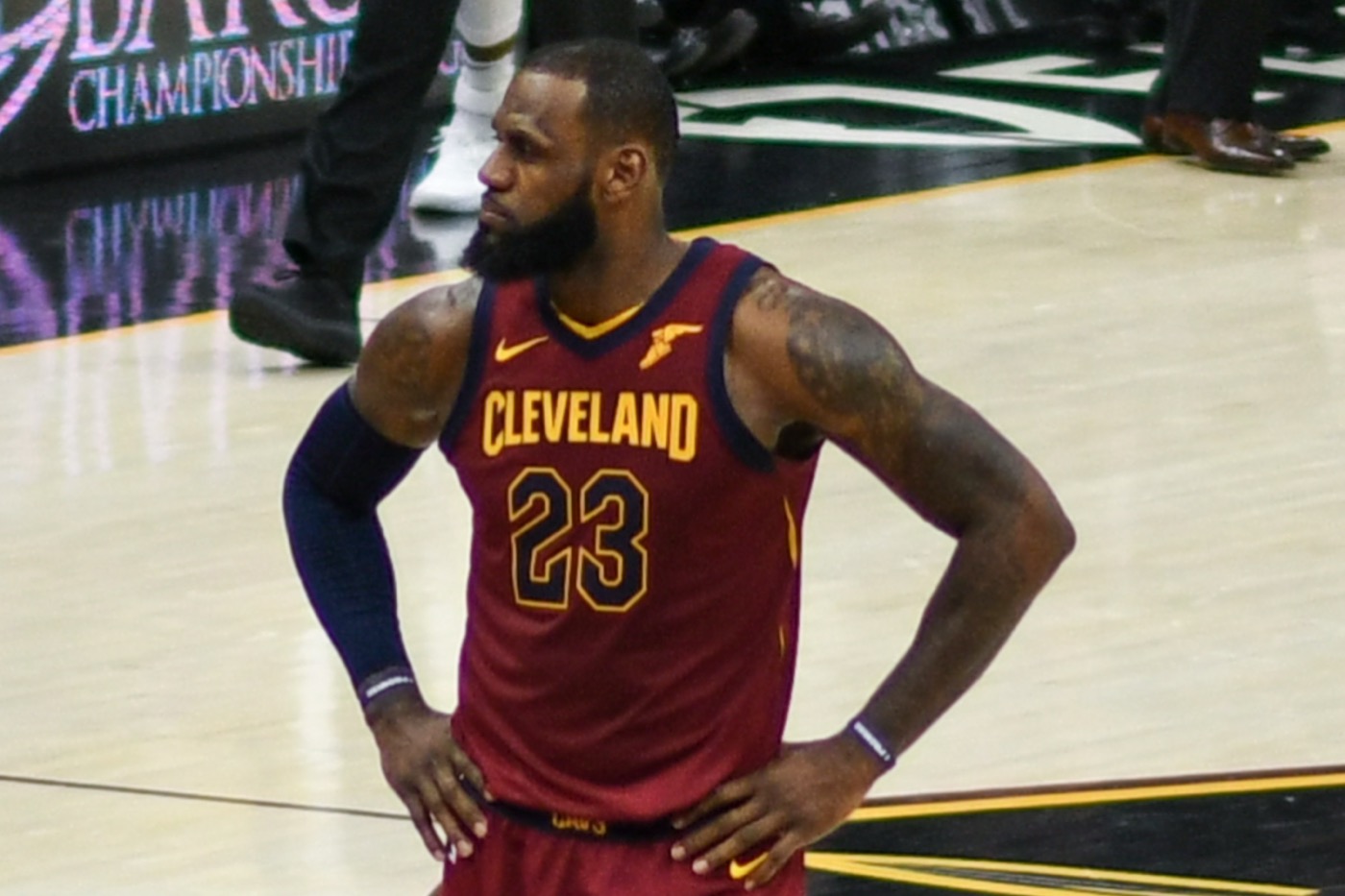
Search "how much does LeBron James sleep" and you will get one answer, over and over, with total confidence: twelve hours a night.
He has never said that.
What he has actually said, on the record, is smaller and more useful. In November 2018 he sat down with his longtime athletic trainer Mike Mancias on The Tim Ferriss Show, episode 349, and talked about sleep for a good stretch of it. The transcript is public. Here is the target, in his words: "get those eight: if you can get nine, that's amazing. Sometimes, I even get 10 hours of sleep."
Eight. Nine on a good night. Ten sometimes.
He also described how Mancias polices it, the most human part of the episode: "He gets on me every single day, every single day about my sleep. 'How much sleep did you get last night? How much sleep? You get your eight hours? You get your nine hours?'"
LeBron has played more minutes than almost anyone in the history of the sport, over a career lasting more than two decades. When the person with that career tells you what he protects, it is worth writing down accurately.
Where the "12 hours" number actually comes from
We went looking for a primary source for "LeBron sleeps 12 hours a night." There isn't one. What exists is an anecdote, he has occasionally mentioned sleeping around twelve hours in a day, night sleep plus a long nap stacked together, including once joking he slept through a holiday party. The sites that repeat it do not link a transcript, an interview date, or a timestamp. They link each other.
So the honest verdict on the three numbers you will see:
- Eight to ten hours nightly: verified. His own words, Tim Ferriss Show #349, November 2018.
- A long afternoon nap: verified. In that same episode he says, of that very afternoon, "when I leave here, I'm going to go home and take a nap for probably about two and a half hours too."
- "Twelve hours every night", not traceable. It appears to be a one-off day total, repeated until it turned into a schedule. Treat it as internet folklore.
Aim at twelve hours tonight and you will fail, decide the habit is for people with private chefs, and quit. Aim at the number he actually named and you are aiming at something a person with a job can hit.
The habit, precisely
- A nightly target of eight, with nine as the good version. Not a range he hopes for. A number someone asks him about every single day.
- A nap that is part of the plan, not a collapse. He describes going home after work to sleep another couple of hours. It is scheduled around, not squeezed in.
- A room built for it. Mancias, in the same episode, on what they set up: "making sure the temperature's set at a particular, probably 68 to 70 degrees is probably optimal" and "making sure the room is completely dark," with "no distractions."
- Electronics off. Mancias again: "trying to turn off your... all your electronics, the televisions, your phones, etc."
- Something boring on in the background. LeBron: "I love a nice sleep app." He has talked about using Calm, with rain sounds.
Notice what is not in there. No supplement stack. No exotic device. No 4am. The most-cited work ethic in American sport comes down to a cold dark room, no phone, and rain noise.
What the science says
Seven hours is the floor for adults, and it came from a formal process. The American Academy of Sleep Medicine and the Sleep Research Society ran a consensus panel and concluded adults should sleep 7 or more hours per night regularly, with less linked to worse health outcomes (Watson et al. SLEEP, 2015). Be clear what that is: experts reading a large pile of mostly observational evidence, not one experiment. And it is a floor, not a target. LeBron's eight-to-ten sits above it. Your seven-and-a-half also clears it.
The famous "more sleep makes athletes better" study is much smaller than its reputation. Cheri Mah's team at Stanford extended basketball players' sleep and measured sprint times, free-throw and three-point accuracy, and reaction time. All of it improved (Mah et al. SLEEP, 2011). Now the size, out loud: 11 players, no control group. With that design you cannot separate the extra sleep from ordinary practice improvement, from expectation, or from knowing you are being measured. Nearly every "athletes should sleep more" headline of the last fifteen years traces back to those eleven players. Encouraging early data, not a settled result.
A cool, dark room is the least controversial part of the routine. Core body temperature falls as you fall asleep, and a room that helps that happen is easier to sleep in than one that fights it. The 68 to 70°F Mancias names sits inside the range sleep guidance generally points at. Set once, works nightly.
Evening screens go with later bedtimes and shorter sleep. A systematic review found the association turning up consistently, more evening screen time, later bedtime, less sleep (Hale & Guan, Sleep Medicine Reviews, 2015). Two caveats that matter: it covered children and adolescents, not adults, so don't over-extend it, and it is association, not cause. It supports the shape of the phones-off rule without proving the mechanism.
Writing your own behavior down is one of the better-evidenced things here. A meta-analysis of 122 studies found interventions prompting people to self-monitor clearly outperformed those that didn't (Michie et al. Health Psychology, 2009). That is the engine under Mancias asking the question daily: somebody checks, so the number gets counted, so it gets protected.
What this story cannot prove. LeBron sleeps a lot, and LeBron had one of the longest elite careers in sports history. Two facts side by side, not a chain. He has genetics almost nobody has and a full-time trainer whose job includes asking about his sleep. His day has room for a two-and-a-half-hour nap because sleeping is his job. Plenty of players sleep nine hours and are out of the league by twenty-eight. The claim that survives is smaller and still worth having: adults who regularly get under seven hours do worse (Watson 2015), a dark cool room with no screens in it is easier to sleep in, and a habit somebody checks on is a habit that gets kept.
Why the room does more work than the willpower
Most people trying to fix their sleep attack the bedtime: set an earlier one, lie there, give up in a week.
Look at what LeBron and Mancias describe and almost none of it is willpower. The thermostat is set once. The room is made dark once. The phone goes somewhere else. You are not trying to be more disciplined at 11pm, the worst hour of the day to ask anyone for discipline. You are arranging a room so the easy thing and the right thing are the same thing. The daily question does the rest, when someone asks your number every day, it is no longer an intention and becomes a thing with a score.
How to run it yourself, starting tonight
- Aim at eight, not twelve. Eight is his stated target and it is reachable on a Tuesday with a job. Twelve is a number the internet made up, and chasing it is how you give up on the eight you could have had.
- Work backwards from your wake time. Pick the time you must be up, subtract eight and a half hours, and that is lights out. It is arithmetic, not ambition.
- Set the room once: cool, and dark enough that you cannot see your hand. Mancias names 68 to 70°F. Blackout curtains or a cheap eye mask, and tape over the standby lights. One evening's work, paying out every night after.
- Screens off 30 to 45 minutes before you want to be asleep. That is Mancias' actual number, and it is the sourced version of this rule, not "the phone leaves the room," which he never says. LeBron's own phone runs the Calm app all night. Going further and charging it in another room is a reasonable extra step, and other people are on record doing exactly that, just don't credit it to him.
- Nap short or nap properly, and not late. His is about two and a half hours because his day allows it. Yours probably doesn't. Twenty minutes or a full cycle; the middle-length one leaves most people groggy, and anything after mid-afternoon comes out of tonight's sleep.
- Have something ask you the number every day. That is the Mancias role. Ten seconds, written down. Across 122 studies, the writing-it-down part was doing real work (Michie et al. 2009).
The mistakes that kill this habit
Chasing the mythology instead of the quote. Twelve hours is not his schedule, and aiming at it guarantees failure at something that was never the target.
Buying gear instead of changing the room. The evidenced parts cost almost nothing, a thermostat setting, darkness, screens off before bed. A tracker that tells you every morning that you slept badly is not the same as sleeping better.
Doing it for four nights and judging it. One good night proves nothing and one bad night disproves nothing. This shows itself across a few weeks of ordinary days.
Treating the nap as the headline. It is the most quoted and least copyable part. If your day has no room for two and a half hours, that is not a failure of discipline. The night is the part that transfers.
Keeping the phone as the alarm. Phone in the bedroom tends to mean phone in the bed at midnight. LeBron does not solve this one: his phone is in the room all night.
Reading "sleep more" as a fix for being exhausted. If you get the hours and still wake up wrecked, or snore heavily, or are sleepy all day, that is a conversation with a doctor. Blackout curtains do not address it.
Where HealthBrew fits
The part of this routine that generalizes is the daily question. Mancias asks LeBron his number every single day, and that is why the number gets protected.
HealthBrew's nightly close is that question, minus the trainer. Sixty seconds at the end of the day: how it went, what you did, when you turned in. After a few weeks it shows you what you cannot see from inside a single day, which nights come before your good ones. Membership, cancel anytime.
We wrote about LeBron because he won, and picking people because they won is a biased way to pick anyone. Thousands sleep eight hours in a cool dark room with the phone in the kitchen, and nobody writes a page about them. They just feel better on a normal Wednesday, which was always the part worth having.
Educational content, not medical advice. Quotes are from LeBron James and Mike Mancias on The Tim Ferriss Show #349 (November 2018), public transcript. The widely-repeated "12 hours a night" figure is not traceable to a primary source and we do not repeat it as fact. Persistent snoring, gasping, or daytime exhaustion deserve a doctor, not a routine.
Common questions
How many hours does LeBron James actually sleep?
He has said eight, with nine as a good night and ten sometimes. His words on The Tim Ferriss Show #349 (November 2018): "get those eight, if you can get nine, that’s amazing. Sometimes, I even get 10 hours of sleep." He also mentioned taking an afternoon nap of about two and a half hours that same day, which is where the inflated day totals come from.
Does LeBron James really sleep 12 hours a night?
There is no primary source for it. The figure appears to come from occasional remarks about a twelve-hour day total, night sleep plus a long nap, repeated until it became a nightly schedule. The pages that state it do not cite a transcript, date, or timestamp. Treat eight to ten as the verified nightly target and twelve as folklore.
Is there good evidence that more sleep improves athletic performance?
Weaker than the headlines suggest. The most-cited study extended sleep in Stanford basketball players and reported faster sprints and better shooting accuracy (Mah et al. SLEEP, 2011), but it had 11 players and no control group, so it cannot separate the sleep from ordinary practice improvement or from expectation. The better-supported claim is the general one: the AASM and Sleep Research Society consensus that adults should regularly get 7 or more hours (Watson et al. SLEEP, 2015).
Want more days like theirs — measured on your own life?
HealthBrew is a physician-built longevity habit tracker. Close your day in about 60 seconds; your AI companion coach finds what your best (“green”) days have in common. Educational self-reflection — not medical advice.
Related guides
Want more days like theirs — measured on your own life?
HealthBrew is a physician-built longevity habit tracker. Close your day in about 60 seconds; your AI companion coach finds what your best (“green”) days have in common. Educational self-reflection — not medical advice.
Close tonight · ~60 seconds