The Diet for Healthy Aging: What 105,015 Adults Ate Over 30 Years
Fewer than one in ten reached 70 with body, mind and mood intact. Their plates looked alike.
Most diet studies ask who died. This one asked a better question: who reached 70 in good shape?
The study
Researchers used two long US cohorts, the Nurses' Health Study and the Health Professionals Follow-up Study, with diet questionnaires from 1986 to 2016 (Tessier 2025, Nature Medicine). That is 105,015 people, 66% of them women, average age 53 at the start, followed for up to 30 years.
Healthy aging had a strict definition: living to 70 without chronic disease, with cognitive, physical and mental health intact. Only 9,771 people made it. That is 9.3%.
What the 9.3% ate
The team scored everyone against eight dietary patterns. Higher scores on every one of them went with better odds of healthy aging. People in the top fifth for the Alternative Healthy Eating Index had 86% higher odds than people in the bottom fifth. When the bar was moved to age 75, the odds were more than double (odds ratio 2.24).
You do not need to learn eight patterns. The foods were the same across them.
Linked to better odds: fruits, vegetables, whole grains, unsaturated fats, nuts, legumes and low-fat dairy.
Linked to worse odds: trans fats, sodium, sugary drinks, and red or processed meats.
The authors' own summary: diets rich in plant foods, with moderate amounts of healthy animal foods.
Protein, and where it comes from
A second paper looked at protein in midlife (Ardisson Korat 2024, American Journal of Clinical Nutrition). It followed 48,762 women from the Nurses' Health Study who were under 60 in 1984. Decades later, 3,721 of them (7.6%) met the definition of healthy aging: none of 11 major chronic diseases, good mental health, and no impairment in thinking or physical function.
More protein went with better odds. The source mattered more than the amount. For each extra 3% of daily calories from protein, the odds of healthy aging were 5% higher for protein overall, 7% for animal protein, 14% for dairy protein and 38% for plant protein.
On a 2,000-calorie day, 3% of calories is about 15 grams of protein. That is our arithmetic, not the paper's.
Food and mood, one small trial
Both studies above are observational. One small trial tested food directly. SMILES randomly assigned 67 adults with moderate to severe depression to seven sessions with a dietitian or to social support, for 12 weeks (Jacka 2017, BMC Medicine). Most were already in therapy, on medication, or both. At 12 weeks, 10 of 31 people in the diet group were in remission, against 2 of 25 in the support group.
That is 56 people with complete data, in one trial, and the diet was added to their regular care. It is a reason to take food seriously. It is not a replacement for treatment, and nobody should change treatment because of it.
What to do tonight, with a number
Add one. One serving of beans, lentils or nuts, today. Those are plant proteins, the kind with the strongest link in the second study.
Swap one. One sugary drink for water or unsweetened tea, today.
Then write down that you did both. One and one, every day this week, is seven of each.
The honest part
Nobody was assigned a diet in the two big studies. People who eat more vegetables and nuts also tend to have more money, more schooling and other good habits, and statistics cannot remove all of that. The participants were nurses and health professionals, and they reported their own food on questionnaires. The abstracts we read give no serving sizes, so we have not invented any.
And 9.3% is a hard number. Most people in the study did not reach 70 in full health, including many who ate well.
Where HealthBrew fits
A food list is easy to agree with and hard to keep. What helps is seeing which of your own days went well and what you ate on them. HealthBrew's nightly close takes about a minute and, after a few weeks, shows your pattern. Membership, cancel anytime.
Educational content, not medical advice. Sources, read as PubMed abstracts on 10 November 2026 (we did not read the full papers): Tessier et al., Nature Medicine, 2025; Ardisson Korat et al., American Journal of Clinical Nutrition, 2024; Jacka et al., BMC Medicine, 2017.
Common questions
What is the best diet for healthy aging?
In a 30-year study of 105,015 US adults (Tessier et al., Nature Medicine, 2025), eight different dietary patterns were all linked to better odds of reaching 70 in good health. The strongest link was for the Alternative Healthy Eating Index: 86% higher odds for the top fifth against the bottom fifth. The shared foods were fruits, vegetables, whole grains, unsaturated fats, nuts, legumes and low-fat dairy. The study is observational, so it shows a link, not proof of cause.
Which foods are linked to worse aging?
In the same study, higher intakes of trans fats, sodium, sugary drinks, and red or processed meats were linked to lower odds of healthy aging. Only 9.3% of participants met the definition of healthy aging at all.
Is plant protein better than animal protein for aging?
In 48,762 women followed from 1984 (Ardisson Korat et al., American Journal of Clinical Nutrition, 2024), every type of protein was linked to better odds of healthy aging, and plant protein had the strongest link: 38% higher odds for each extra 3% of daily calories, against 7% for animal protein. The study included only female nurses and is observational.
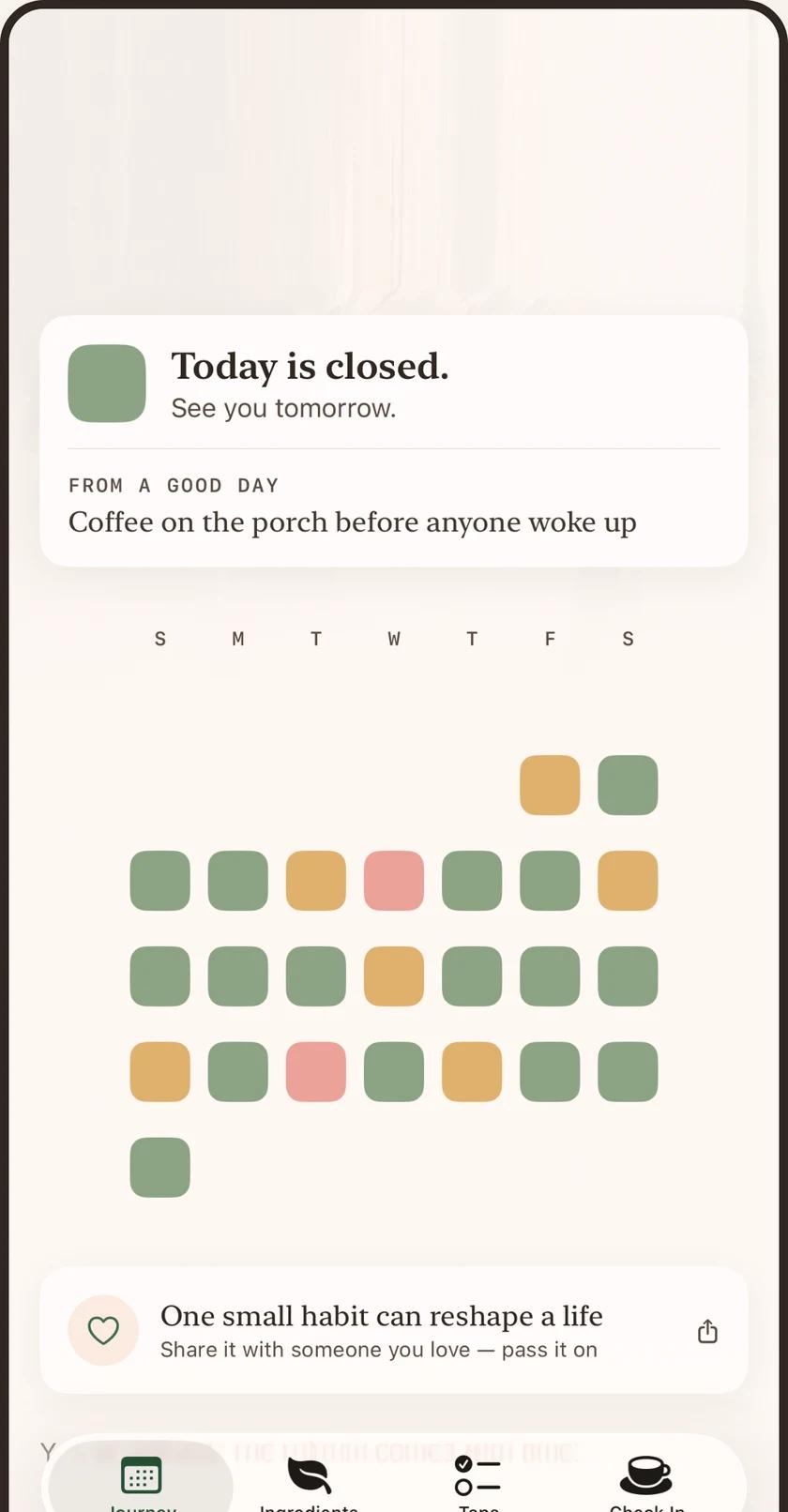
HealthBrew app
What do your own best days have in common?
HealthBrew is a habit tracker built by a physician. Close your day in about 60 seconds. After a few weeks, your AI companion shows you what your best days share.



Educational, not medical advice.
Building this into your own days? Habit Tracker App: How to Pick One You Will Keep
Related guides
Healthy-living advice, by email.