How Much Sitting Is Too Much? The Line in the Data Is 10.6 Hours a Day
A workout does not cancel a day in a chair. Moving 30 minutes of sitting to anything else showed up in the numbers.
You can meet the exercise guideline and still spend most of the day in a chair. A large study asked whether that matters. It does.
The study
UK researchers used one week of activity-tracker data from 89,530 adults, average age 62 (Ajufo 2025, Journal of the American College of Cardiology). The typical person was sedentary for 9.4 hours a day. The middle half of the group ran from 8.2 to 10.6 hours.
People above 10.6 hours a day were compared with people at 8.2 to 9.4 hours. They had a 45% higher risk of heart failure and a 62% higher risk of dying from cardiovascular causes. For those two outcomes, risk turned upward at about 10.6 hours.
Exercise did not cancel it
The same links held among people who met the guideline of 150 minutes of moderate to vigorous activity a week. In the authors' words, guideline-level exercise only partly offset the extra risk.
So "I work out" and "I sit all day" are two separate facts about you. Both count.
Thirty minutes moved
Among people above 10.6 hours, the researchers modeled what went with trading 30 minutes of sitting for any other activity. The answer was a 7% lower risk of heart failure. It was the same 7% among people who already met the exercise guideline.
It does not have to be a workout. Standing up and doing something else counted.
How often to get up
A small lab study tested this directly. Eleven middle-aged and older adults each spent five separate 8-hour days in the lab: one sitting straight through, and four with different walking breaks (Duran 2023, Medicine & Science in Sports & Exercise). The breaks were light walking for 1 or 5 minutes, every 30 or 60 minutes.
Only one pattern lowered the blood sugar response to the day: 5 minutes of walking every 30 minutes. Every pattern lowered systolic blood pressure compared with sitting all day, by about 4 to 5 mm Hg at best.
That is 11 people, measured for a day at a time. It shows what happens over hours, not what happens to health over years.
Two more numbers worth having
In 25,241 UK adults who did no formal exercise, three short bursts of hard effort a day, one or two minutes each, went with a 38% to 40% lower risk of death (Stamatakis 2022, Nature Medicine). Taking the stairs fast counts.
And in a review of 57 studies, 7,000 steps a day against 2,000 went with a 47% lower risk of death (Ding 2025, The Lancet Public Health). Steps are sitting time you did not spend sitting.
What to do tonight, with a number
Add up your sitting for today. Commute, desk, meals, couch. Write the number of hours down. Most people are surprised.
If it is over 10, move 30 minutes of it. A phone call taken on foot. A walk after dinner. Standing through one show.
Tomorrow, try the lab pattern for one afternoon: 5 minutes of easy walking every 30 minutes. Set a timer. If every 30 minutes is not possible at your job, every hour still lowered blood pressure in the lab.
The honest part
The big study is observational. People who sit more may already be less well, and the trackers were worn for one week, which then stood in for years of life. A tracker estimates sitting from movement. It does not watch you. The abstract we read does not give the length of follow-up, so we have not stated one. The lab study is tiny and short.
What is solid is the direction. Long unbroken sitting went with worse outcomes, exercise only partly made up for it, and small trades showed up in the numbers.
Where HealthBrew fits
Nobody remembers how long they sat last Tuesday. Writing down one line a night is how you find out whether this week was better than last. HealthBrew's nightly close takes about a minute and, after a few weeks, shows your pattern. Membership, cancel anytime.
Educational content, not medical advice. Sources, read as PubMed abstracts on 10 November 2026 (we did not read the full papers): Ajufo et al., Journal of the American College of Cardiology, 2025; Duran et al., Medicine & Science in Sports & Exercise, 2023; Stamatakis et al., Nature Medicine, 2022; Ding et al., The Lancet Public Health, 2025.
Common questions
How many hours of sitting a day is too much?
In 89,530 UK adults who wore activity trackers (Ajufo et al., Journal of the American College of Cardiology, 2025), risk of heart failure and cardiovascular death turned upward at about 10.6 hours of sedentary time a day. People above that line had a 45% higher risk of heart failure and a 62% higher risk of cardiovascular death than people at 8.2 to 9.4 hours. The study is observational.
Does exercise cancel out sitting all day?
Only partly. In the same study, the links between long sitting and heart failure and cardiovascular death held among people who met the guideline of 150 minutes of activity a week. Trading 30 minutes of sitting for any other activity went with a 7% lower risk of heart failure, including among people who already exercised.
How often should you get up from your desk?
In a small lab study of 11 adults (Duran et al., Medicine & Science in Sports & Exercise, 2023), 5 minutes of light walking every 30 minutes was the only pattern that lowered the blood sugar response over an 8-hour day. Every pattern tested, including 1 minute every hour, lowered systolic blood pressure compared with sitting straight through.
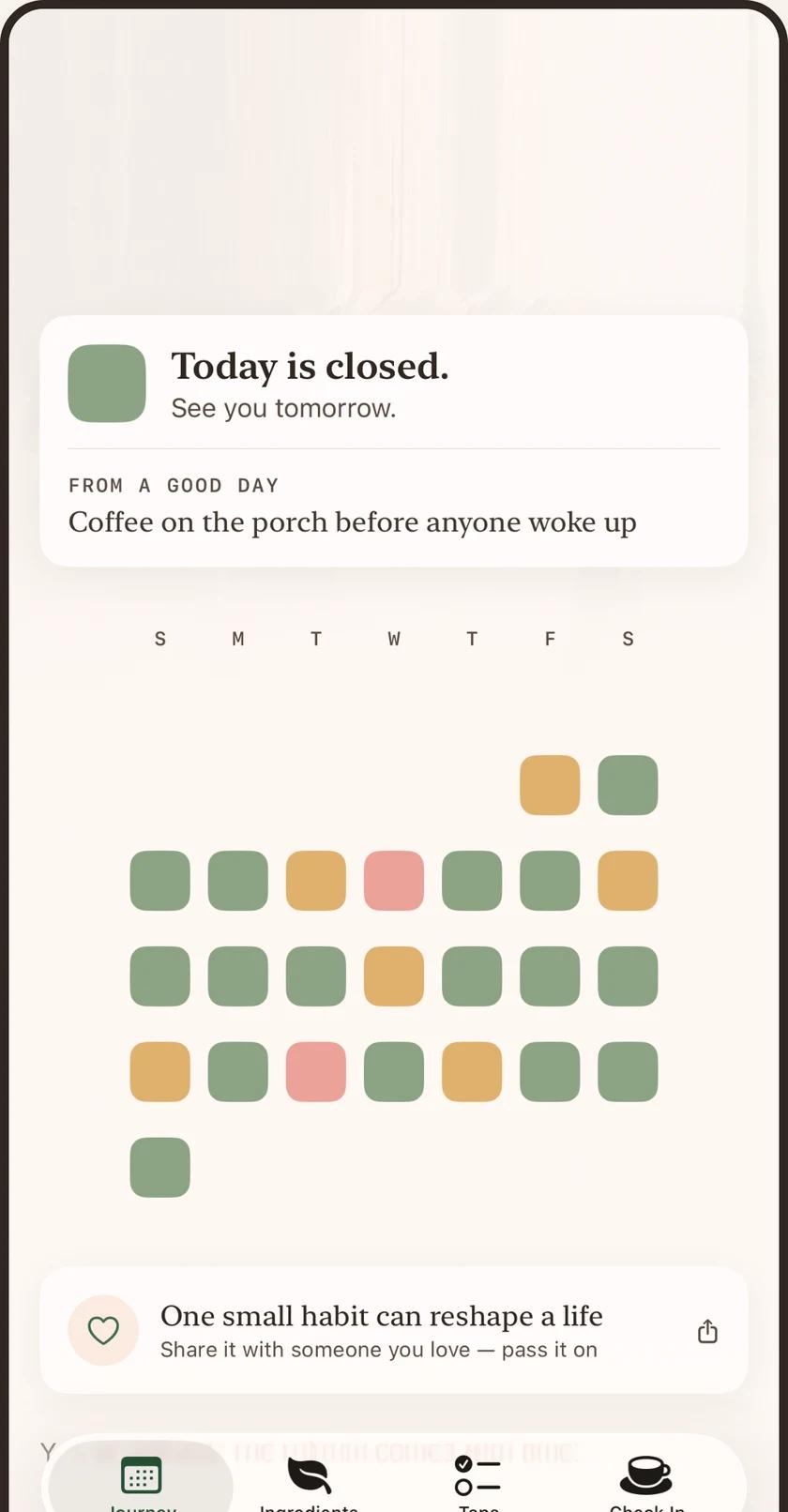
HealthBrew app
What do your own best days have in common?
HealthBrew is a habit tracker built by a physician. Close your day in about 60 seconds. After a few weeks, your AI companion shows you what your best days share.



Educational, not medical advice.
Building this into your own days? Habit Tracker App: How to Pick One You Will Keep
Related guides
Healthy-living advice, by email.