How Much Running Matters?
What researchers learned when they measured minutes, mortality, fitness, and everyday function.

Watch the film in HealthBrew
A wide range in Copenhagen
Forty people were in the most strenuous jogging group. Two died during follow-up. The estimate for that group was imprecise, with a confidence interval spanning lower and higher mortality than the sedentary comparison group.
What counted as a short run?
In the Dallas cohort, the shortest-duration running group included everyone reporting some running and fewer than 51 minutes per week. That group had lower mortality than nonrunners. The study did not estimate a threshold within that category.
What can people still do as they age?
The Stanford team followed older runners and a comparison group for 21 years. They asked about everyday activities such as getting dressed, getting up, and walking. The runners reported increasing difficulty more slowly.
References
The film uses ten original studies and one pooled analysis. The pooled analysis includes some of the individual cohorts discussed in the film.
- Schnohr et al., Copenhagen City Heart Study, 2015. The strenuous group estimate was HR 1.97, 95% CI 0.48-8.14. Published correspondence confirms 2 deaths among 40 strenuous joggers.
- Porter et al., NHANES. Running was associated with HR 0.70 (0.59-0.84) for all-cause mortality.
- Watts et al., NIH-AARP. Running at 7.5 to under 15 MET-hours per week was associated with HR 0.85 (0.78-0.92) versus no running.
- Oja et al., British cohort. Running estimate HR 0.87 (0.68-1.11) included no difference.
- Lee et al., Dallas cohort. Table 3 groups participants by weekly running time. The lowest nonzero category was under 51 minutes per week. A category average is not a tested minimum.
- Helgerud et al., eight-week randomized experiment. Interval training produced larger gains in aerobic fitness in the men studied. The outcome was aerobic capacity.
- Williams and Thompson, runners and walkers. Comparable associations with incident hypertension, cholesterol and diabetes at equivalent energy expenditure.
- Belavý et al., spinal disc MRI. The cross-sectional study compared MRI markers of disc composition in habitual runners and nonsporting adults.
- Lo et al., Osteoarthritis Initiative. Self-selected running was not associated with worse radiographic progression in this cohort.
- Chakravarty et al., 21-year Stanford study. Older runners accumulated self-reported disability more slowly than the comparison group.
Pedisic et al., pooled analysis. Six prospective cohorts, 232,149 adults, pooled adjusted HR 0.73 (0.68-0.79). No significant dose-response trend was detected by weekly duration, pace, frequency or total volume.
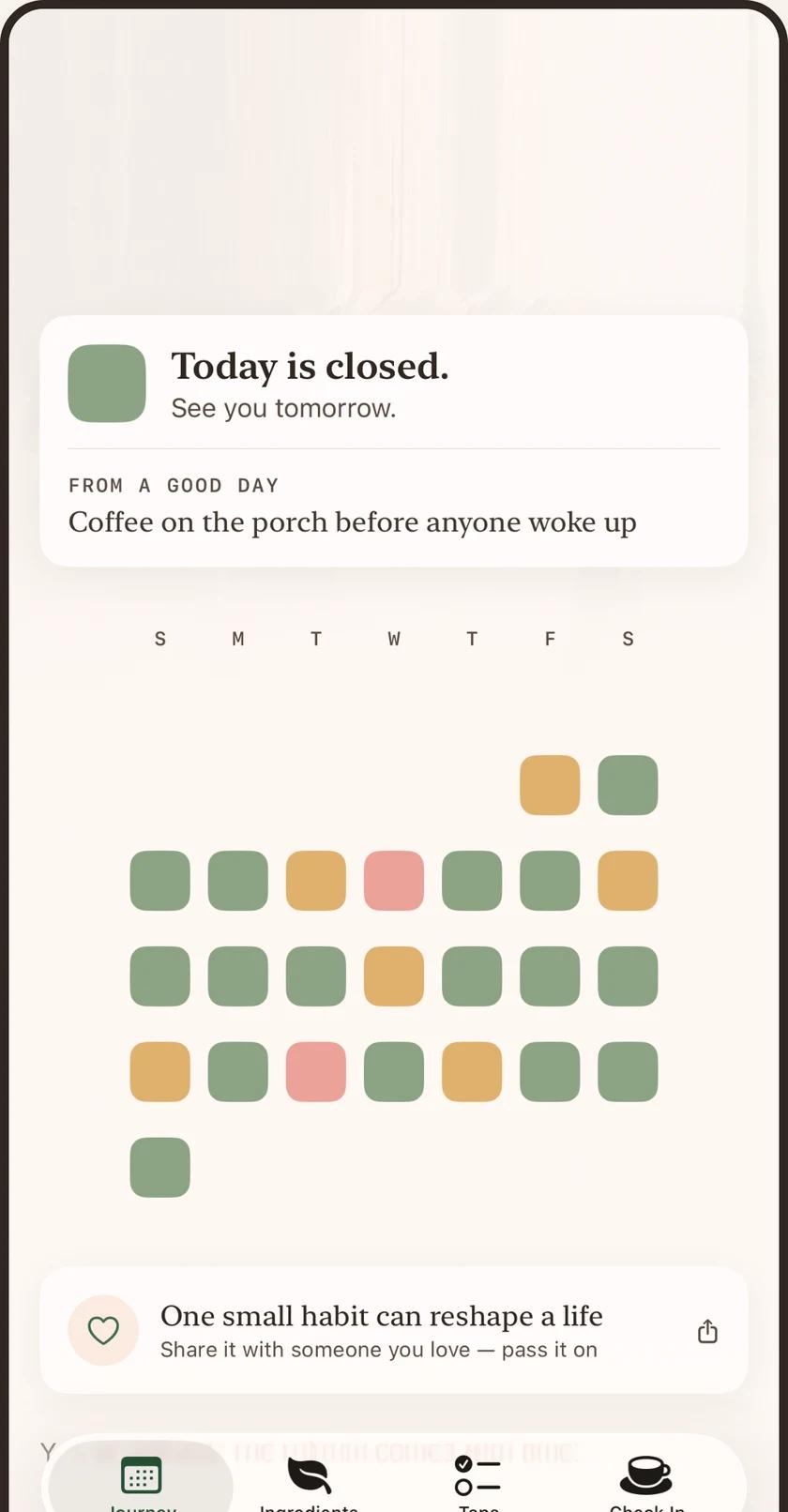
HealthBrew app
What do your own best days have in common?
HealthBrew is a habit tracker built by a physician. Close your day in about 60 seconds. After a few weeks, your AI companion shows you what your best days share.



Educational, not medical advice.
Building this into your own days? Habit Tracker App: How to Pick One You Will Keep
Related guides
Healthy-living advice, by email.