Maya Angelou’s Rented Hotel Room (2026): She Had the Pictures Taken Off the Walls
Not a time-of-day trick. A room with one job, that she paid for by the month, in the town where she already had a house.
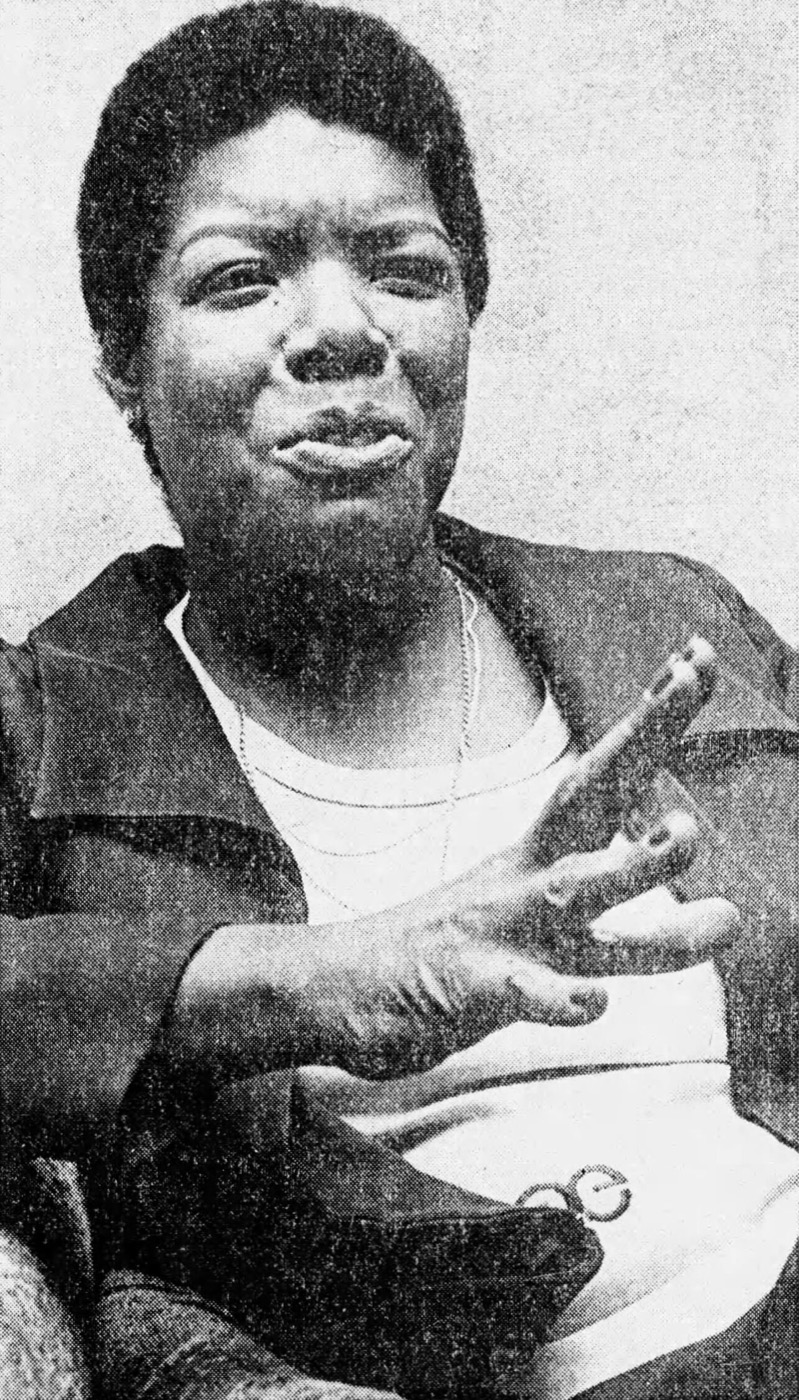
Maya Angelou lived in a house she liked. She was a serious cook, she kept house guests, she did the candles and the music at dinner. And she could not write there.
So she rented a hotel room in the same town and paid for it by the month. She left home at six in the morning, was in the room by six-thirty, and lay across the bed with a yellow pad until early afternoon. Then she went home. She kept that going for decades, in town after town, and described the whole thing herself: in 1990 she sat with George Plimpton for The Paris Review, The Art of Fiction No. 119, recorded on stage at the YMHA on Manhattan's upper East Side.
What she actually said
Plimpton opened by listing what he knew she wrote with: a made-up bed, a bottle of sherry, a dictionary, Roget's Thesaurus, yellow pads, an ashtray, and a Bible. Several answers later, asked how she began the day, she said:
"I have kept a hotel room in every town I've ever lived in. I rent a hotel room for a few months, leave my home at six, and try to be at work by six-thirty. To write, I lie across the bed, so that this elbow is absolutely encrusted at the end, just so rough with callouses. I never allow the hotel people to change the bed, because I never sleep there. I stay until twelve-thirty or one-thirty in the afternoon, and then I go home and try to breathe; I look at the work around five; I have an orderly dinner, proper, quiet, lovely dinner; and then I go back to work the next morning."
Then the part that makes this a page about place rather than a page about mornings:
"I insist that all things are taken off the walls. I don't want anything in there. I go into the room and I feel as if all my beliefs are suspended. Nothing holds me to anything. No milkmaids, no flowers, nothing."
She stripped the room. That is the method, not a better chair, not a view, but less in the room on purpose, so nothing in it belonged to any other part of her life.
She was still doing it more than twenty years later. In an interview with Noah Charney published in The Daily Beast on April 10, 2013, she said she still kept a room in her hometown by the month, went around 6:30, had the paintings and decoration taken out, and was usually out by 2.
The sherry gets quoted constantly, so here it is straight: asked whether the bottle was for the end of the day or to fuel the imagination, she said she might have it at six-fifteen as soon as she got in, but usually around eleven. Reported, not recommended.
The number almost nobody quotes
Plimpton asked how much revising was involved. She read the morning's pages back after dinner, and:
"And more often than not if I've done nine pages I may be able to save two and a half or three."
Roughly a third. Two thirds of a Maya Angelou morning went in the bin that same evening, by her own hand. She called it the cruelest time, admitting the work doesn't work, and blue-pencilling it. So the bare room was not producing finished prose. It produced raw pages, most of which she killed.
The habit, precisely
- A second location, rented, in the town she already lived in. A hotel room by the month. She had a home; the home was not where the work happened.
- The room emptied on request. Everything off the walls. Housekeeping in only to empty wastebaskets.
- A fixed arrival and a hard stop. In by six-thirty, home by twelve-thirty or one-thirty. In 2013: still 6:30, out by 2.
- The work read back elsewhere, later. Around five, at home. Writing and judging separated by hours and by an address.
What the science says
Habits are held together by their context, and moving is what breaks them. Wood, Tam and Guerrero Witt followed 115 students (57 men, 58 women) transferring into Texas A&M in spring 2002, surveying them about a month before the move and four weeks after the semester started (Journal of Personality and Social Psychology, 2005). Strong exercise habits survived the move for students who kept exercising in the same kind of location and fell apart for those whose location changed; for students with weak habits, location barely mattered. It is a two-wave self-report study, not an experiment, evidence about where behavior lives, not proof of cause. But it runs both ways: if new surroundings can dismantle a habit, a surrounding that belongs to one activity is doing real work.
The classic "place matters" study is thinner than the textbooks suggest. In Godden and Baddeley's experiment, 18 divers learned word lists on shore or underwater and recalled them in the same or the other place; recall was better when the place matched (British Journal of Psychology, 1975). Murre's 2021 replication found the effect harder to reproduce. Treat it as a hint, not a law.
It takes longer than you have been told, and one missed day does not undo it. In the University College London study, volunteers repeated a daily behavior in a consistent context for 12 weeks (Lally et al. European Journal of Social Psychology, 2010). The famous "66 days" is a median over the 39 people whose curves fitted the model well : 96 enrolled, 82 usable, 62 modelled, 39 good fits, range 18 to 254 days, self-reported, mostly postgraduates. The same paper found that "missing one opportunity to perform the behaviour did not materially affect the habit formation process."
And nobody has tested any of this on writing a book. No controlled trial shows a dedicated room makes anyone a better writer. What the evidence supports is narrower and still useful: behavior is tied to place, and a place used for one thing is easier to start that one thing in.
Why a bare room beats a nice one
Every object in a room is a small suggestion. A photograph suggests the person in it. A pile of mail suggests the mail. Angelou's answer was subtraction, not willpower, take it down, and nothing is left to suggest anything except the work. The rent did work too: she paid monthly for a room she never slept in, so it could not quietly become the guest room or where the laundry lands.
It was a boundary in both directions as well. She went home at half twelve and the house went back to being a house. People copying her copy the going; the leaving is half the design.
We have a separate page on Toni Morrison's writing ritual, where the switch is a moment rather than a place, coffee in the dark, before the light. Neither is about the hour on the clock. Morrison used a moment because she had two small children and no spare room; Angelou used an address. If your home has an hour nobody claims, take Morrison's route. If not, take Angelou's.
How to run it yourself, starting tonight
- Pick one surface that does only the work, and clear it off tonight. Not a corner you also eat at. A library or an empty meeting room is better still. The point is that it is not where the rest of your life happens.
- Take the pictures off the wall in front of it. That is her actual instruction and it costs nothing. If it is a wall you share, face the desk at a blank one.
- Put a start time and a stop time on it, and make the stop real. Hers were 6:30 and 12:30 to 1:30. Start with 90 minutes if six hours is fantasy. The stop is what makes tomorrow possible.
- Review the work somewhere else, at least four hours later. She read hers back around five, at home. Doing it at 12:35 in the same chair is not review, it is still writing.
- Expect to keep about a third. Nine pages down to two and a half or three, in her own account. Hold your drafts to a standard she didn't hold hers to and you will quit in week two.
- Do not build this out of your sleep. The American Academy of Sleep Medicine and the Sleep Research Society jointly recommend adults regularly sleep 7 or more hours (Watson et al. SLEEP, 2015). A 6:30 start needs an earlier bedtime, not a shorter night. If that doesn't hold within a week, take the room in the evening instead. The address is the lesson here, not the hour.
The mistakes that kill this habit
Getting the second location and then furnishing it. A nice lamp, a plant, a shelf of favourites. She had the walls stripped. The emptiness is the feature.
Copying six-thirty in the morning. She was in the room at that hour for her own reasons and arranged her own day. Most people reading this have a job at nine. Take the bare room; leave the alarm.
Judging the pages where you wrote them. She left the building first. Write and edit in the same chair in the same hour and you will kill good pages and keep bad ones.
Waiting until you can afford a room. The rent is not the copyable part. A cleared table and a bare wall is the same mechanism at zero cost.
Where HealthBrew fits
Setting up the room is easy. Finding out whether it made a difference is not, because you cannot see that from inside one day. HealthBrew's nightly close takes about sixty seconds, a color for the day and a few honest lines. After a few weeks, your AI companion coach reads it back and tells you what your better days had in common. Angelou needed decades of her own attention to work that out. Membership, cancel anytime.
Educational content, not medical advice, and nothing here is a suggestion about alcohol. Sources: Maya Angelou, interviewed by George Plimpton, "The Art of Fiction No. 119," The Paris Review, Fall 1990, recorded on stage at the YMHA in Manhattan, every Angelou quote here is from a passage printed under her own speaker label in that transcript, read in full, not from a summary. Noah Charney, "Maya Angelou: How I Write," The Daily Beast, April 10, 2013, read in full. Wood, Tam & Guerrero Witt, Journal of Personality and Social Psychology 88(6), 2005, read from the authors' posted PDF. Godden & Baddeley, British Journal of Psychology 66, 1975. Lally et al. European Journal of Social Psychology 40(6), 2010. Watson et al. SLEEP, 2015. Maya Angelou died in 2014; nothing here suggests any habit of hers affected her health. We wrote about her because she won a National Medal of Arts and a Presidential Medal of Freedom, plenty of people keep a bare room and a fixed start and are never published, and the room worked just as well for them at getting the pages out.
Common questions
What was Maya Angelou’s writing routine?
In The Paris Review, The Art of Fiction No. 119 (1990, interviewed by George Plimpton), she said: "I have kept a hotel room in every town I have ever lived in. I rent a hotel room for a few months, leave my home at six, and try to be at work by six-thirty." She wrote lying across the bed on yellow pads, kept a dictionary, Roget’s Thesaurus and a Bible with her, never let the bed be changed because she never slept there, and stayed until twelve-thirty or one-thirty in the afternoon. In a Daily Beast interview with Noah Charney published April 10, 2013, she said she still kept the room in her hometown and was usually out by 2.
Why did Maya Angelou have the pictures taken off the hotel walls?
She explained it herself in the same 1990 interview: "I insist that all things are taken off the walls. I don’t want anything in there. I go into the room and I feel as if all my beliefs are suspended. Nothing holds me to anything. No milkmaids, no flowers, nothing." The bare room was the point, a place with nothing in it belonging to any other part of her life.
How much of what she wrote did Maya Angelou actually keep?
About a third, by her own account. Asked how much revising was involved, she told The Paris Review that she read the morning’s work back after dinner and that "more often than not if I’ve done nine pages I may be able to save two and a half or three." She called it the cruelest time, admitting the work does not work, and blue-pencilling it.
Start Compounding Your Habits Tonight.
Use the free reflection generator to log your day. Let your AI companion coach help you find your baseline and have more days you would want again.
Produce OutcomesRelated guides
Want more days like theirs — measured on your own life?
HealthBrew is a physician-built longevity habit tracker. Close your day in about 60 seconds; your AI companion coach finds what your best (“green”) days have in common. Educational self-reflection — not medical advice.
Close tonight · ~60 seconds